Why Wellbeing Matters Across Healthcare Services
Beyond hospitals and acute care, a wide range of healthcare services — outpatient clinics, diagnostic labs, long-term care facilities, home healthcare, telehealth, and community health organizations — form the backbone of patient support. These environments often operate with smaller, distributed teams, high administrative demands, and limited resources.
Why Now
Healthcare service organizations are under mounting pressure to maintain quality while operating leaner: post-pandemic burnout, workforce shortages, digital fatigue, and regulatory scrutiny are converging. For distributed teams, wellbeing challenges are often invisible until turnover or service failures occur. Organizations need real-time, science-backed insight into staff wellbeing, not just lagging indicators like claims processed or absenteeism.
Traditional workforce metrics — attendance, case volume, training completion — fail to capture the human factors that drive performance and retention. That’s where Pietential comes in.
As a workforce wellbeing intelligence platform, Pietential empowers healthcare service organizations to:
- Measure and visualize staff wellbeing across five scientifically validated domains,
- Identify risks in distributed or remote teams, where signs of burnout often go unnoticed,
- Benchmark wellbeing across facilities, job functions, and geographies, and
- Evaluate the impact of initiatives like scheduling changes, training programs, or digital transformations.
By making wellbeing measurable and actionable, Pietential helps healthcare service providers empower their people, ensure continuity of care, and build resilient organizations.
Wellbeing as a Strategic Layer in Healthcare Services
Whether in a community clinic, diagnostic center, or telehealth team, staff wellbeing is a critical driver of performance. Yet most organizations lack a consistent, reliable way to measure it.
Pietential closes this gap by assessing wellbeing across five domains and 20 subdomains:
- Physiological Needs: Nutrition, sleep, activity, environment
- Safety: Physical, psychological, dwelling, spiritual
- Belonging: Family, friendships, social community, intimate compassion
- Self-Esteem: Mastery, identity, self-confidence, self-worth
- Self-Actualization: Mindset, openness, social curiosity, purpose
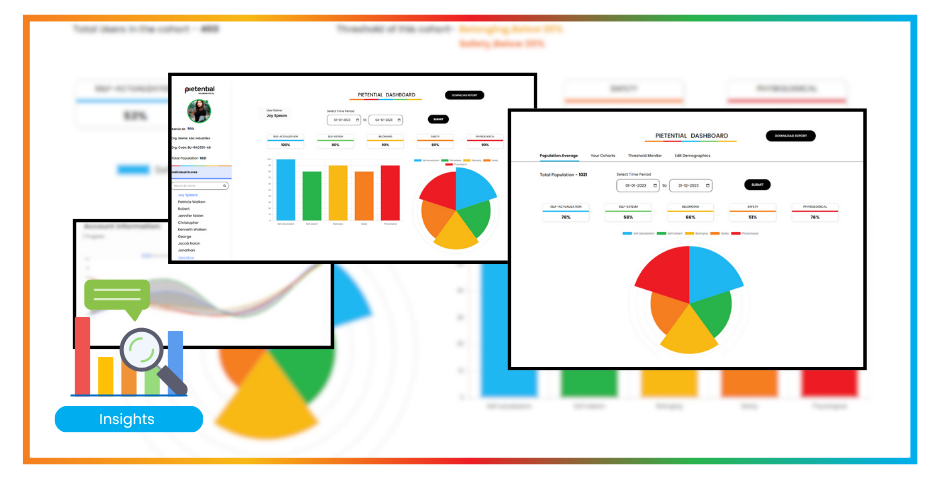
Each employee receives a personalized wellbeing visualization, while leadership teams access de-identified, aggregated data segmented by role, facility, tenure, or region — giving them precise, actionable insights without compromising privacy.
Tools for Healthcare Service Leaders
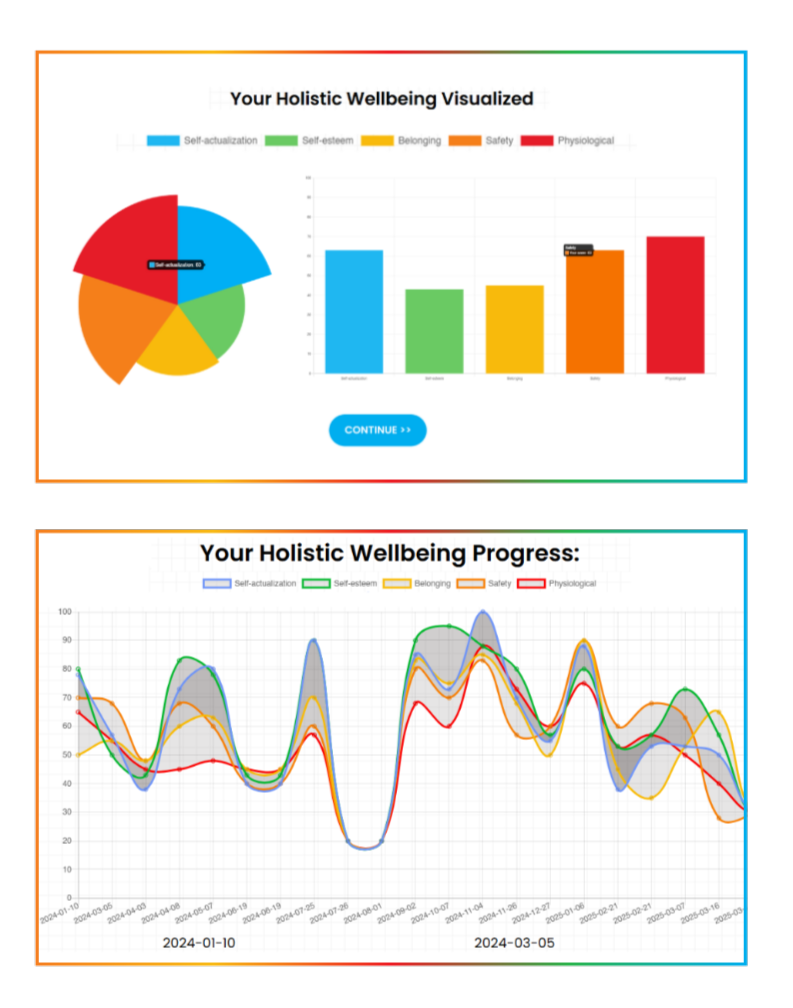
Personalized Wellbeing Dashboard
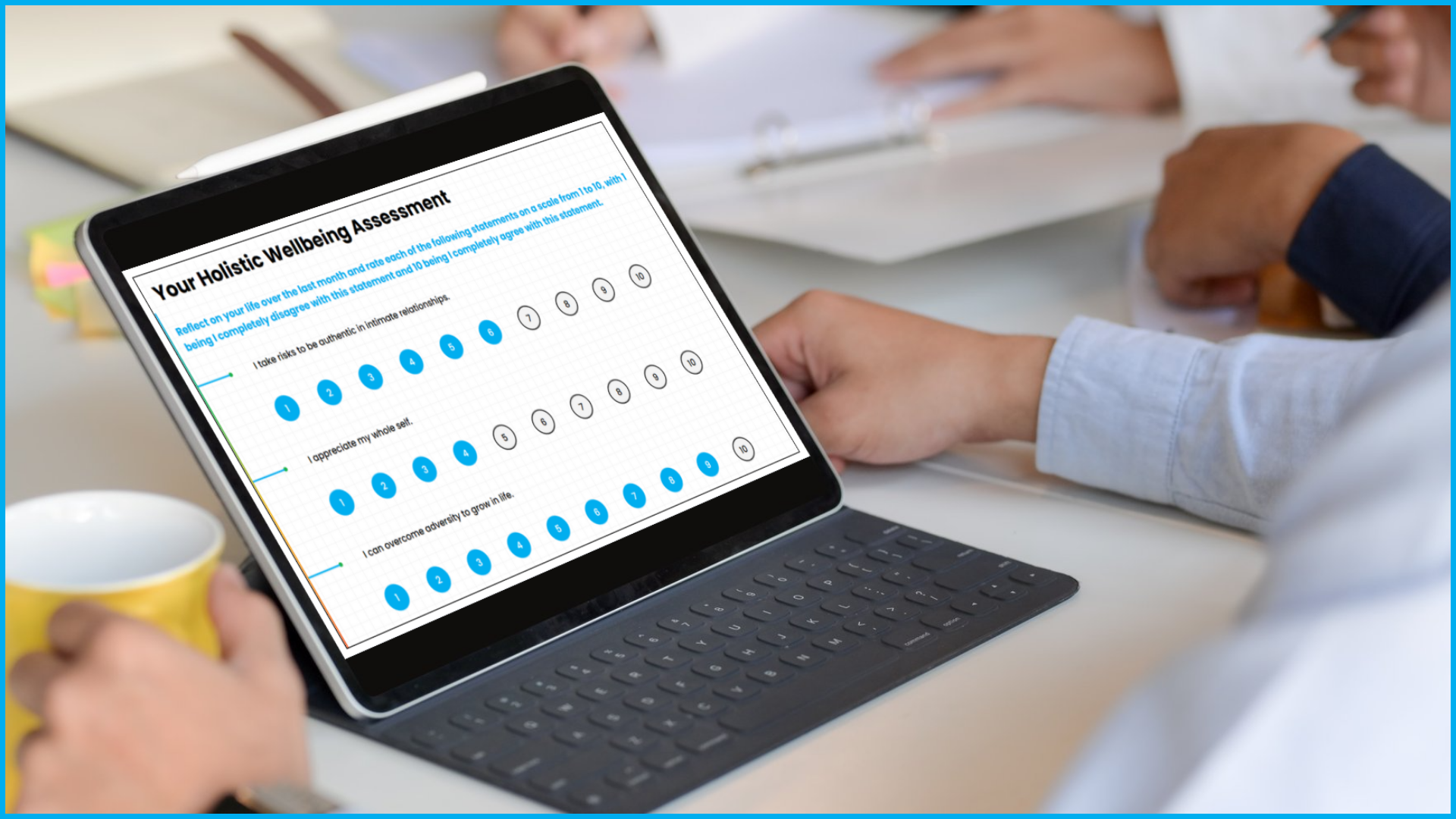
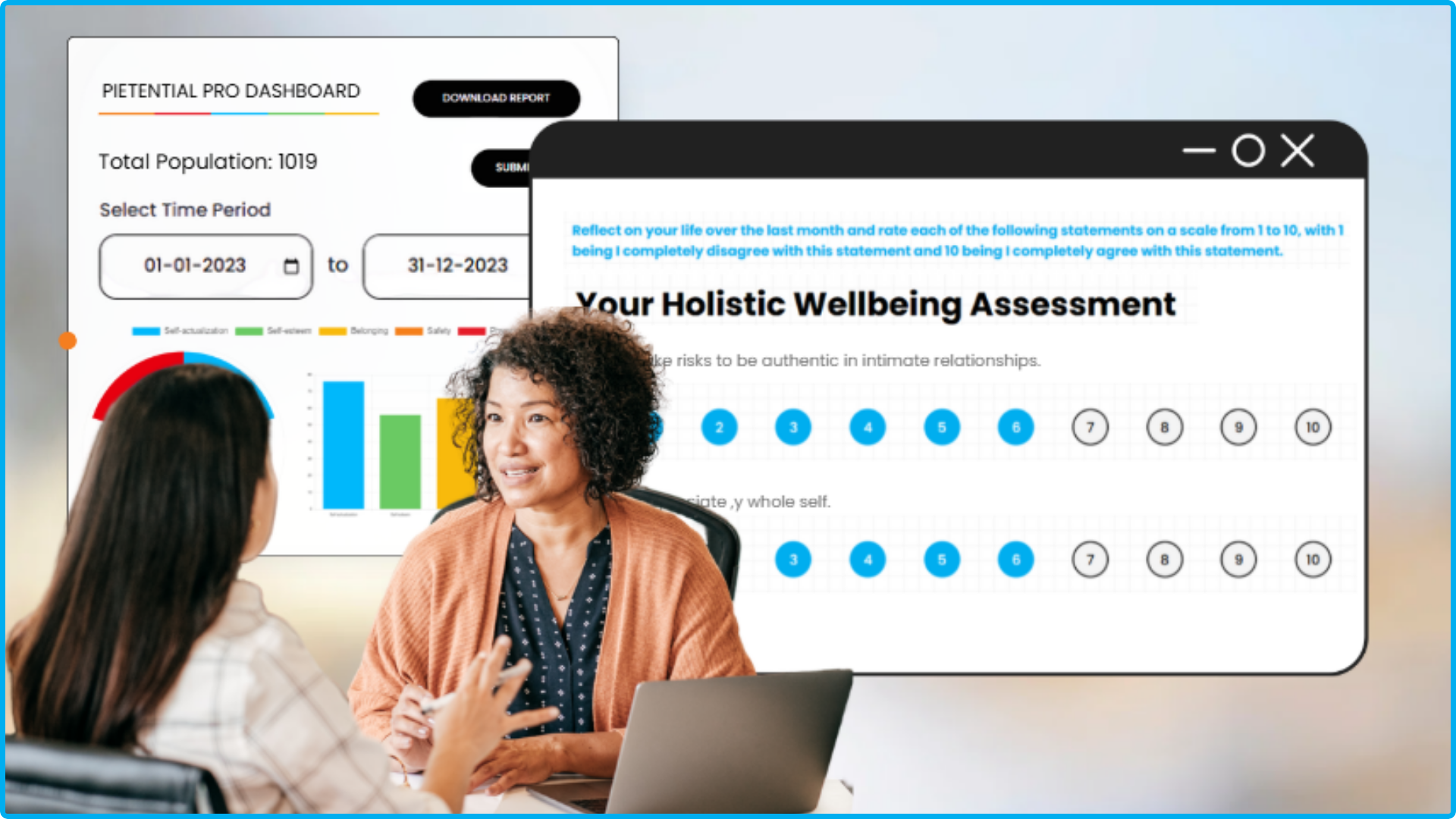
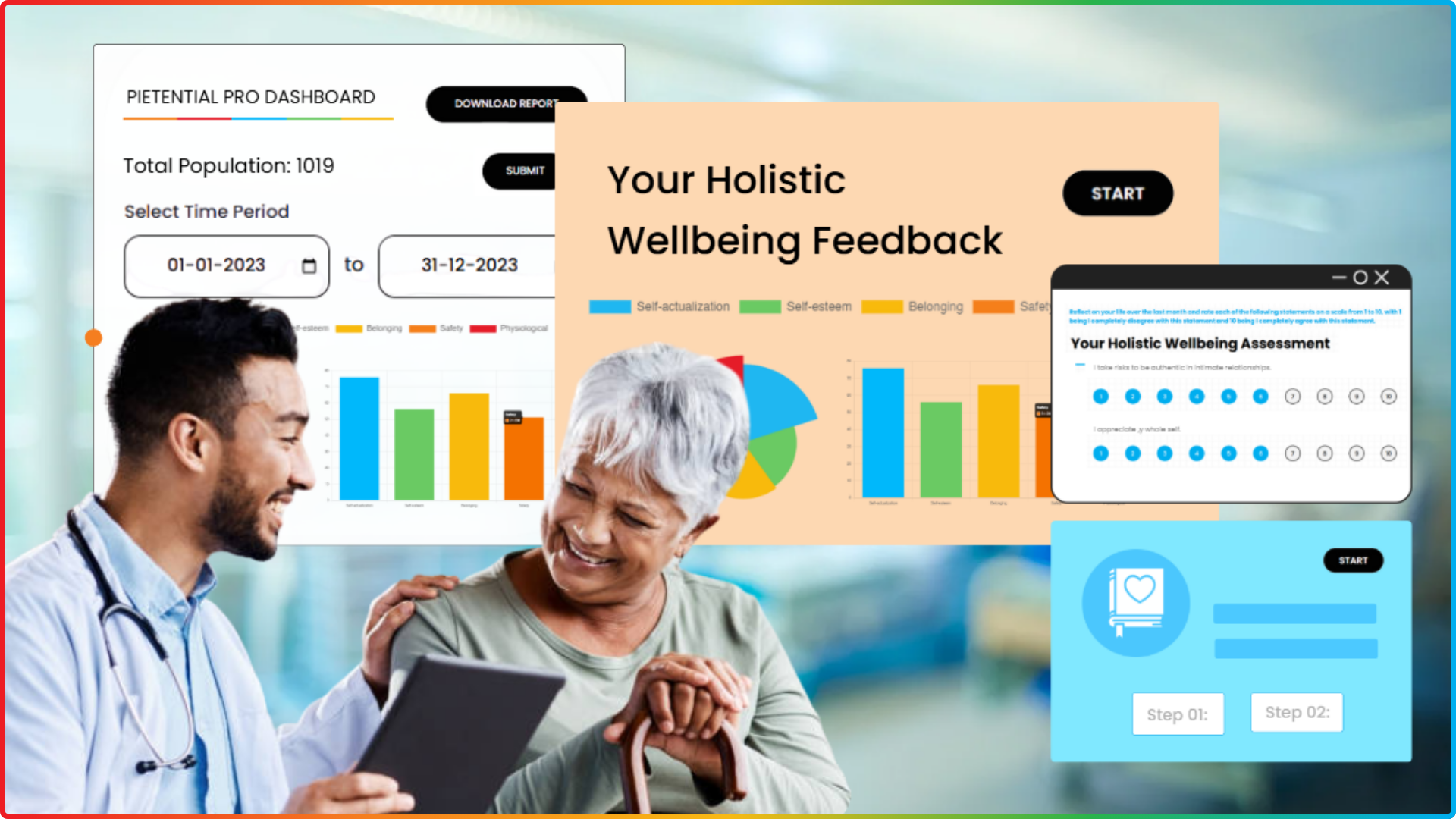
Unlike traditional engagement survey platforms that focus on organizational reports, Pietential gives every employee a private, personalized wellbeing dashboard. This builds trust and creates a feedback loop where staff can see their own progress over time — a powerful engagement driver for distributed teams.
Snapshot: What Employees Receive
- Personalized wellbeing visualization across five domains
- Confidential, secure access
- Ability to monitor personal wellbeing over time
- (Coming soon: Optional linkage to internal resources such as EAP, peer support, or development programs — expected within 90–120 days.)
Visual Dashboard for Leaders
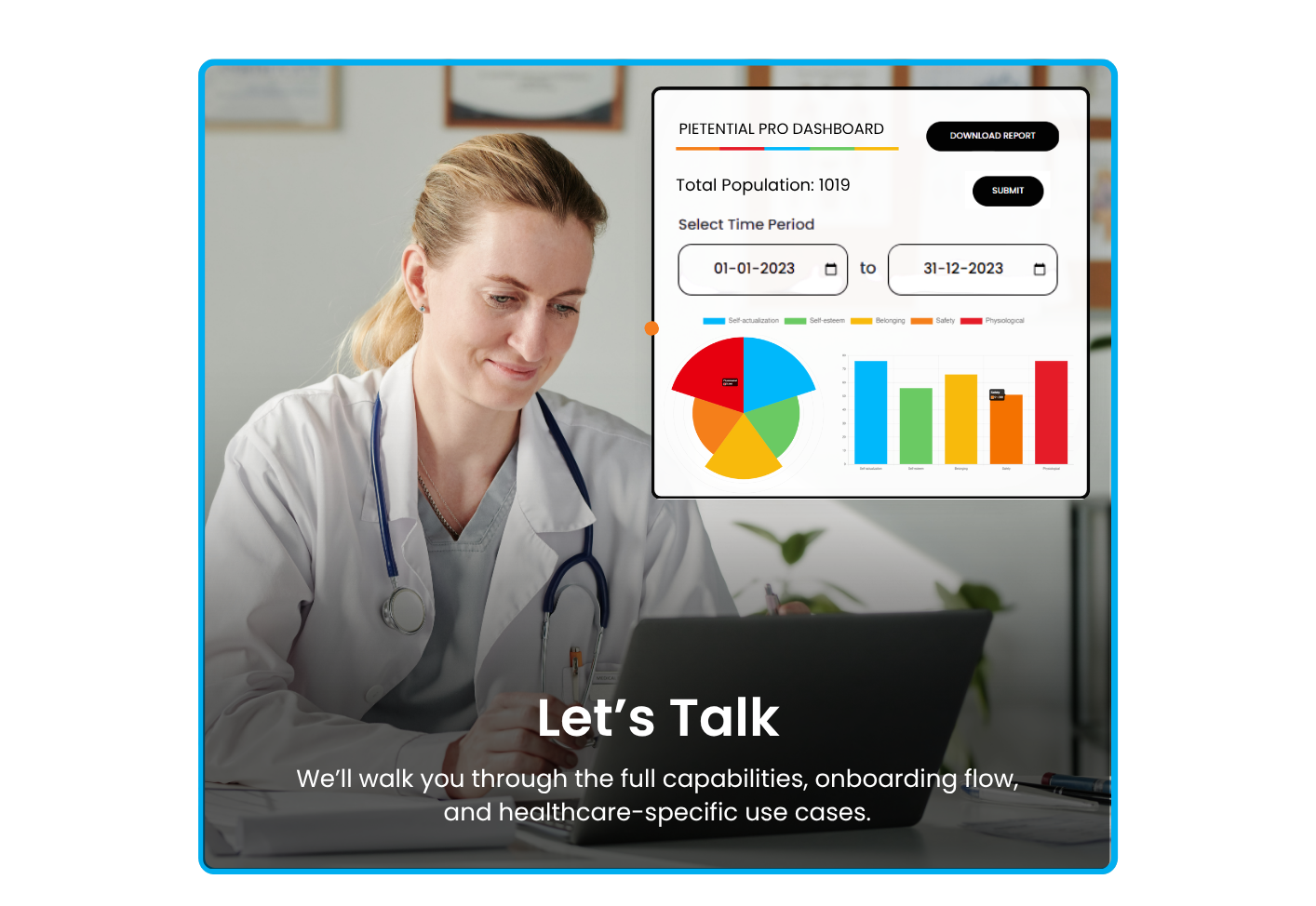
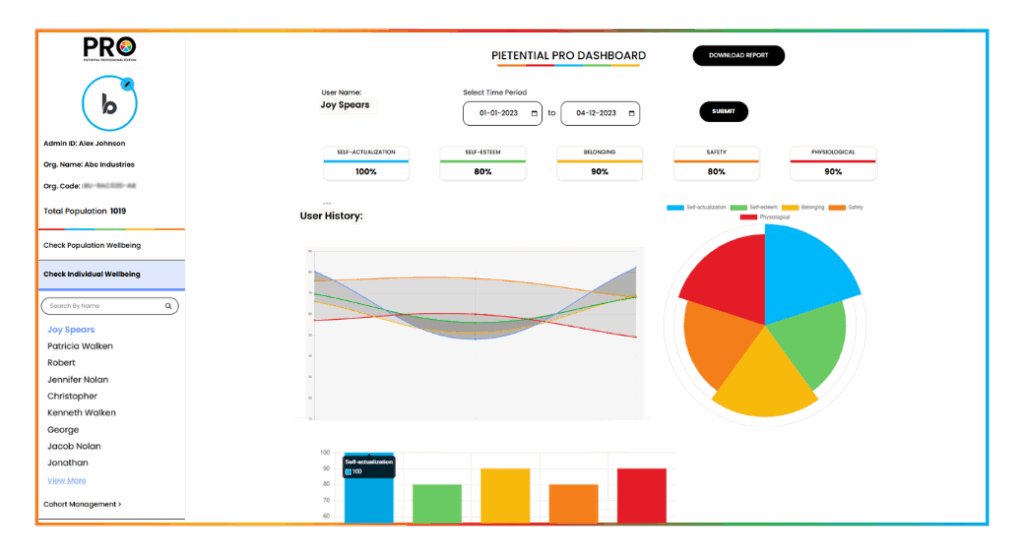
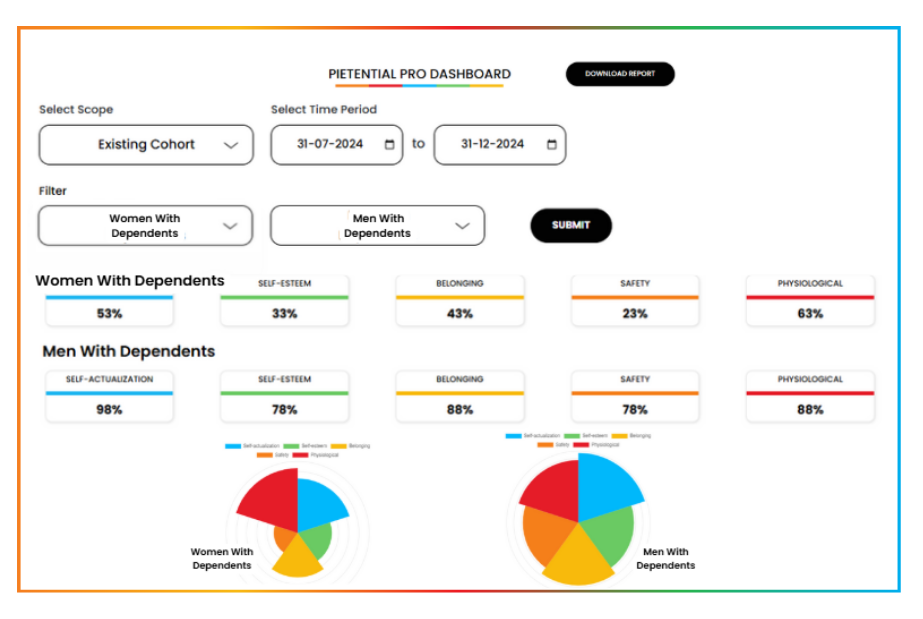
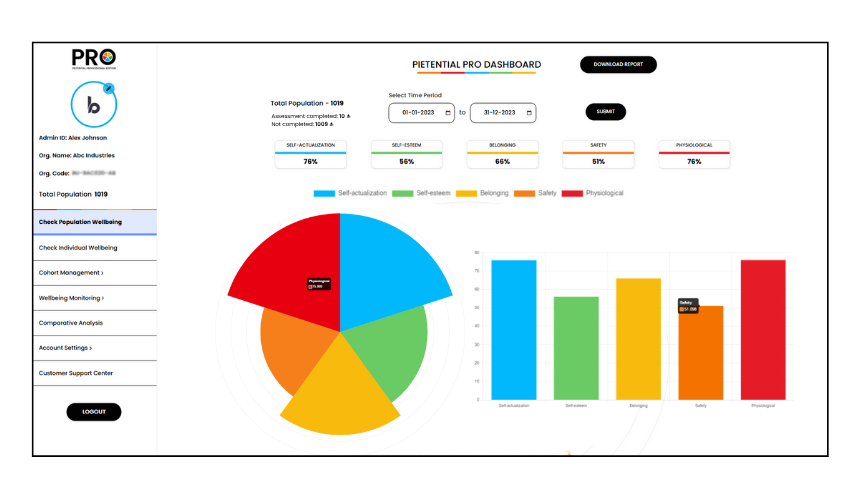
A clear, intuitive dashboard turns wellbeing data into visual insights that leaders can act on quickly. It highlights areas of strength, identifies emerging risks, and enables comparisons across sites, roles, or regions.
MyMazlow™ – Your Wellbeing Companion
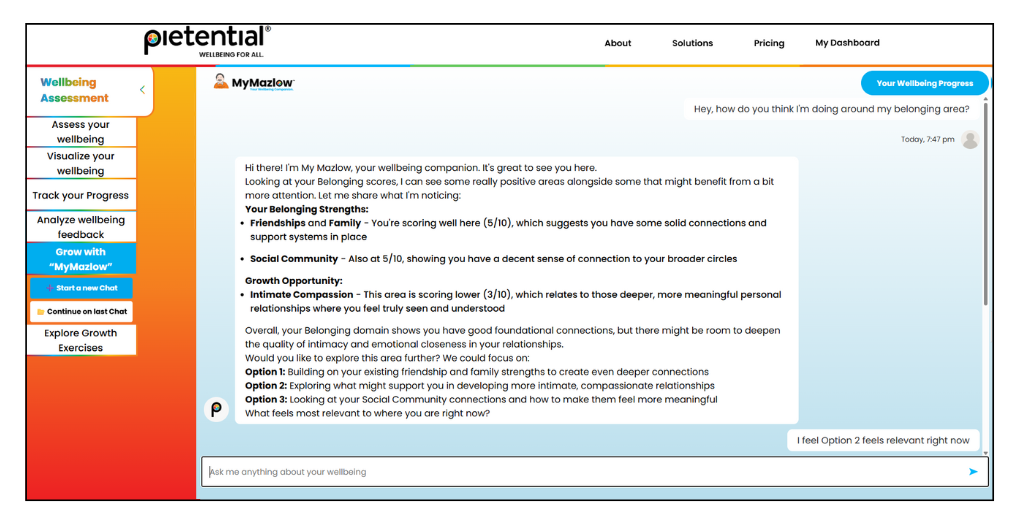
MyMazlow™ engages each employee in reflective, supportive dialogue based on their lowest-scoring domains or subdomains. It helps staff take meaningful, individualized steps toward resilience and balance — critical for home health and remote teams where support is often asynchronous.
Progress Monitoring and Alerts
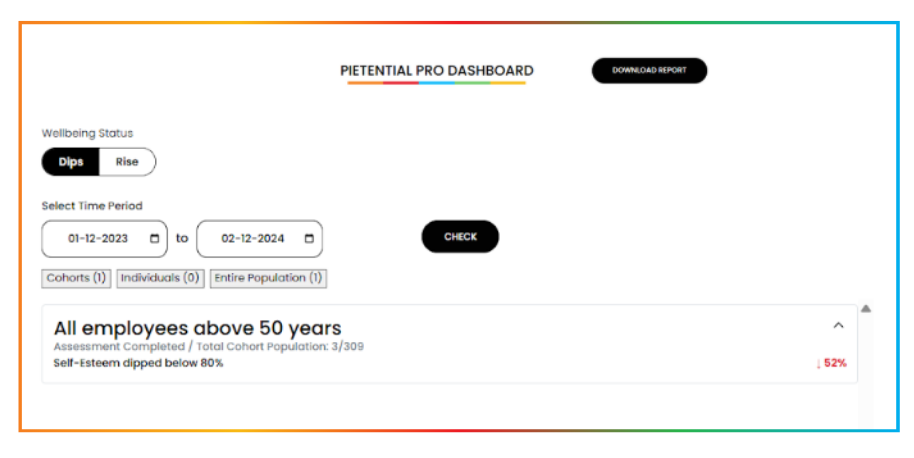
HR managers can monitor wellbeing trends over time, set thresholds for alerts, and identify early warning signs in decentralized workforces — enabling proactive engagement before issues become crises.
Segmentation and Comparative Analysis
Organizations can filter insights by facility, job type (e.g., lab tech vs. home nurse), or geography. This helps uncover systemic risks like fatigue among traveling nurses or low belonging among telehealth staff — and informs targeted, equitable interventions.
Confidential and Secure
All data is encrypted and GDPR-compliant. Pietential collects no PHI or HIPAA-reportable information, ensuring privacy and trust across all roles and locations.
Launch in 3 Simple Steps
1. Share secure link or QR code
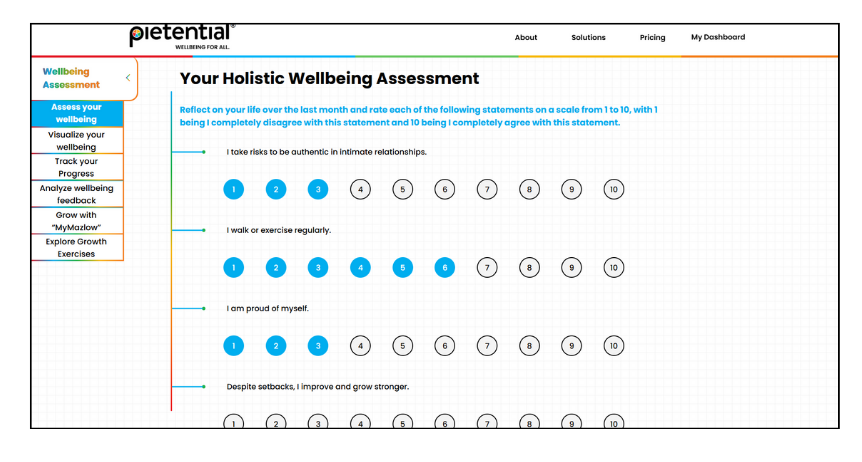
2. Staff complete the 3–5 minute assessment
3. Leadership dashboard goes live instantly
No integration or IT support required.
Designed for Healthcare Service Providers
Pietential supports a broad range of care environments:
- Outpatient Clinics: Track wellbeing of clinicians and administrative staff across multiple sites.
- Diagnostic Labs: Identify fatigue or morale issues in high-volume, repetitive environments.
- Long-Term Care: Support emotionally demanding roles with high turnover and irregular schedules.
- Home Healthcare: Monitor distributed staff who work with little direct supervision.
- Telehealth & Digital Care: Address wellbeing challenges unique to virtual workforces.
- Community Health Centers: Support diverse teams equitably across regions.
What Leaders Gain
- Measurable ROI on programs to retain staff and improve service quality
- Evidence-based insight to guide staffing, scheduling, and training
- Visibility into hidden risks across distributed and remote teams
- Early detection of burnout and disengagement
- A scalable framework that works across multiple facilities and job types
Example Use Case: Strengthening Wellbeing in Healthcare Support Services
A regional healthcare support organization uses Pietential to monitor wellbeing during a period of rapid expansion.
Initial Findings
Assessments reveal dips in Physiological Needs and Belonging. Staff feedback highlights rising fatigue due to heavier caseloads and fewer opportunities for peer interaction across sites.
Action Taken
Leaders adjust shift schedules to support better rest, introduce short “reset breaks” during workdays, and create virtual peer-support forums to strengthen connection — all without increasing headcount.
Measured Outcomes
Within 90 days, Pietential data shows measurable improvements in Physiological Needs and Belonging. Staff report higher energy levels and stronger team connection. Turnover among support personnel declines.
Strategic Impact
Leadership uses Pietential insights to refine policies, balance caseloads, and sustain engagement — ensuring consistent quality of care under growing demand.
Unions and Workforce Advocacy
For organizations with unionized workforces, Pietential provides neutral, third-party wellbeing data that unions can use to advocate for members objectively. This creates a shared fact base between leadership and unions, reducing reliance on anecdotal grievances and supporting constructive bargaining.

Conclusion: Building Sustainable Care Through Workforce Wellbeing
Healthcare services cannot function without resilient, supported staff. Whether in labs, long-term care facilities, or telehealth teams, burnout and disengagement erode service quality and workforce stability.
Pietential brings objective, predictive wellbeing intelligence into healthcare services, giving leaders the ability to see risks clearly, act proactively, and sustain high-quality care delivery — across distributed teams, diverse functions, and changing operational realities.
By reducing preventable turnover and enabling targeted interventions, Pietential supports both care quality and organizational sustainability.