Why Wellbeing Measurement is Critical in Clinical Environments
Hospitals and clinical settings are the heartbeat of healthcare delivery — and among the most demanding workplaces. Physicians, nurses, and allied health professionals face long hours, shift work, high emotional labor, and relentless performance pressure.
Recent research underscores the scale of the crisis: in a 2023 study of more than 20,000 clinicians, 47% of nurses and 32% of physicians reported burnout, which was strongly associated with higher turnover, poorer work environments, too few nurses, and unfavorable patient safety ratings (JAMA Health Forum, 2023).
Why Now:
Hospitals are navigating unprecedented workforce challenges: post-pandemic burnout, financial pressures to increase efficiency without adding FTEs, rising union activity, and intensifying regulatory scrutiny. These pressures demand real-time, science-backed insights into workforce wellbeing — not just annual surveys. Pietential gives leaders this capability in weeks, without IT burden.
Hospitals already invest heavily in employee engagement surveys, workforce programs, and wellness initiatives. These efforts are meaningful and important. Yet even the most established engagement and satisfaction tools often focus on periodic snapshots or surface-level indicators. What they don’t typically provide is a real-time, psychometrically grounded view of individual wellbeing — or tools that give staff personal insight into their own growth.
Pietential adds this critical layer.
As a workforce wellbeing intelligence platform, Pietential empowers hospitals and health systems to:
- Measure and visualize staff wellbeing across five scientifically validated domains,
- Detect early warning signals of burnout, disengagement, or safety concerns,
- Benchmark wellbeing across roles and units (nursing, physicians, admin, allied health), and
- Evaluate program effectiveness — whether that’s a new EAP initiative, leadership development effort, or shift policy change.
By layering wellbeing intelligence into workforce strategies, hospitals can protect staff, reduce turnover, and strengthen care quality simultaneously.
Wellbeing as a Strategic Layer in Healthcare Workforce Management
Clinical excellence depends on human wellbeing. Yet current hospital performance metrics — length of stay, readmission rates, HCAHPS scores — say little about how staff themselves are faring.
Pietential closes this gap by assessing wellbeing across five domains and 20 subdomains:
- Physiological Needs: Nutrition, sleep, activity, environment
- Safety: Physical, psychological, dwelling, spiritual
- Belonging: Family, friendships, social community, intimate compassion
- Self-Esteem: Mastery, identity, self-confidence, self-worth
- Self-Actualization: Mindset, openness, social curiosity, purpose
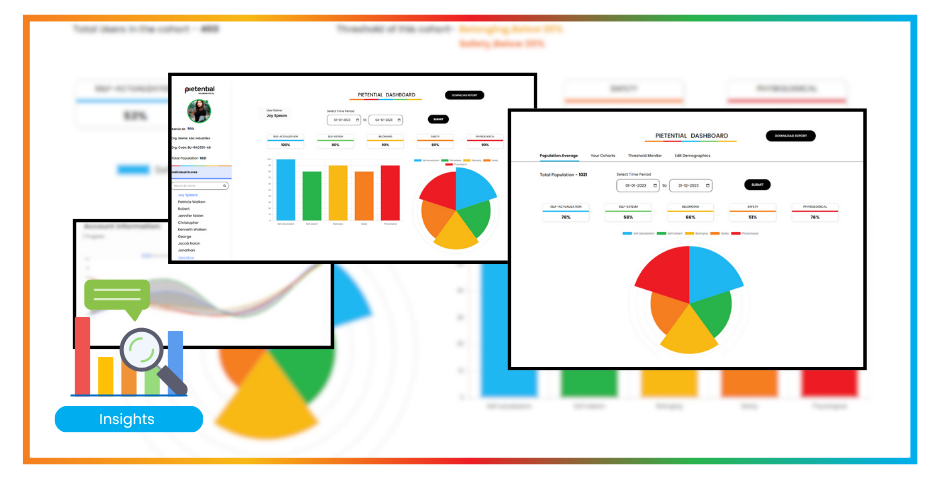
Each staff member receives a personalized visualization of their wellbeing, while organizations access de-identified aggregate insights segmented by role, unit, shift type, tenure, and other demographics. This dual structure builds trust and enables leadership to identify risks early and act with precision.
Tools for Hospitals and Clinical Leaders
Personalized Wellbeing Dashboard
Unlike traditional engagement survey platforms that focus solely on organizational reporting, Pietential gives every individual staff member a private, personalized wellbeing dashboard. This turns measurement into meaningful personal insight — not just another HR metric.
Snapshot: What Employees See
- Personalized visualization across five wellbeing domains
- Confidential, secure access
- Ability to monitor personal progress over time
- (Coming soon: Direct links to internal resources such as EAP, peer support, and leadership development programs — expected within 90–120 days.)
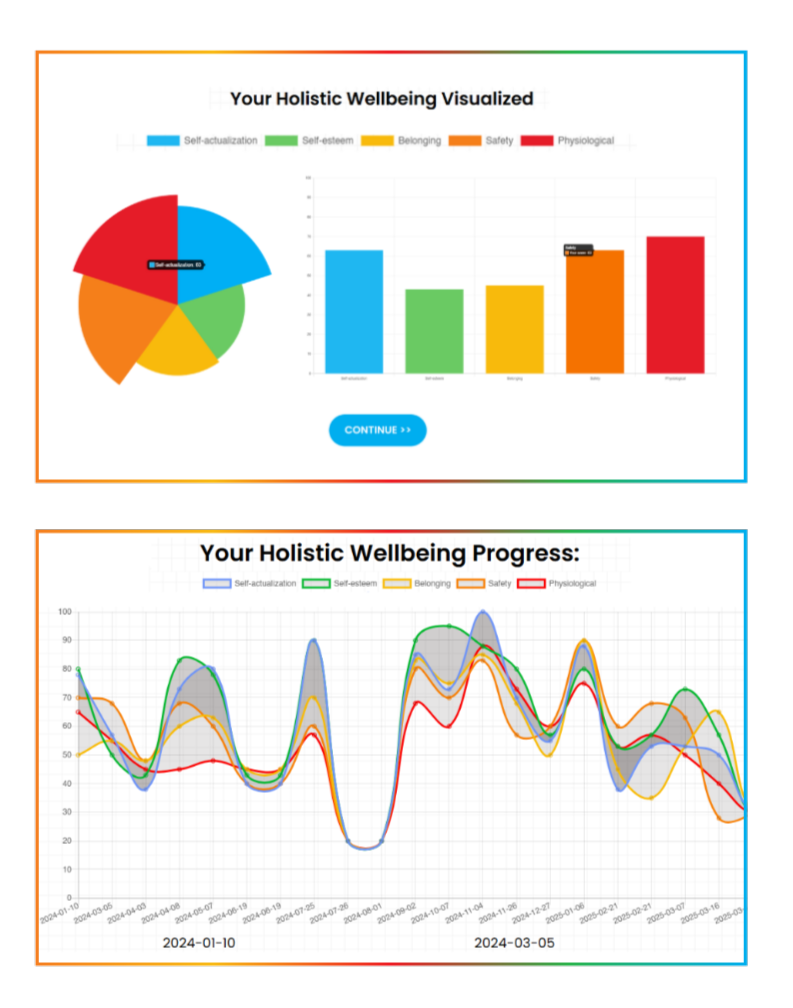
Visual Dashboard for Leaders
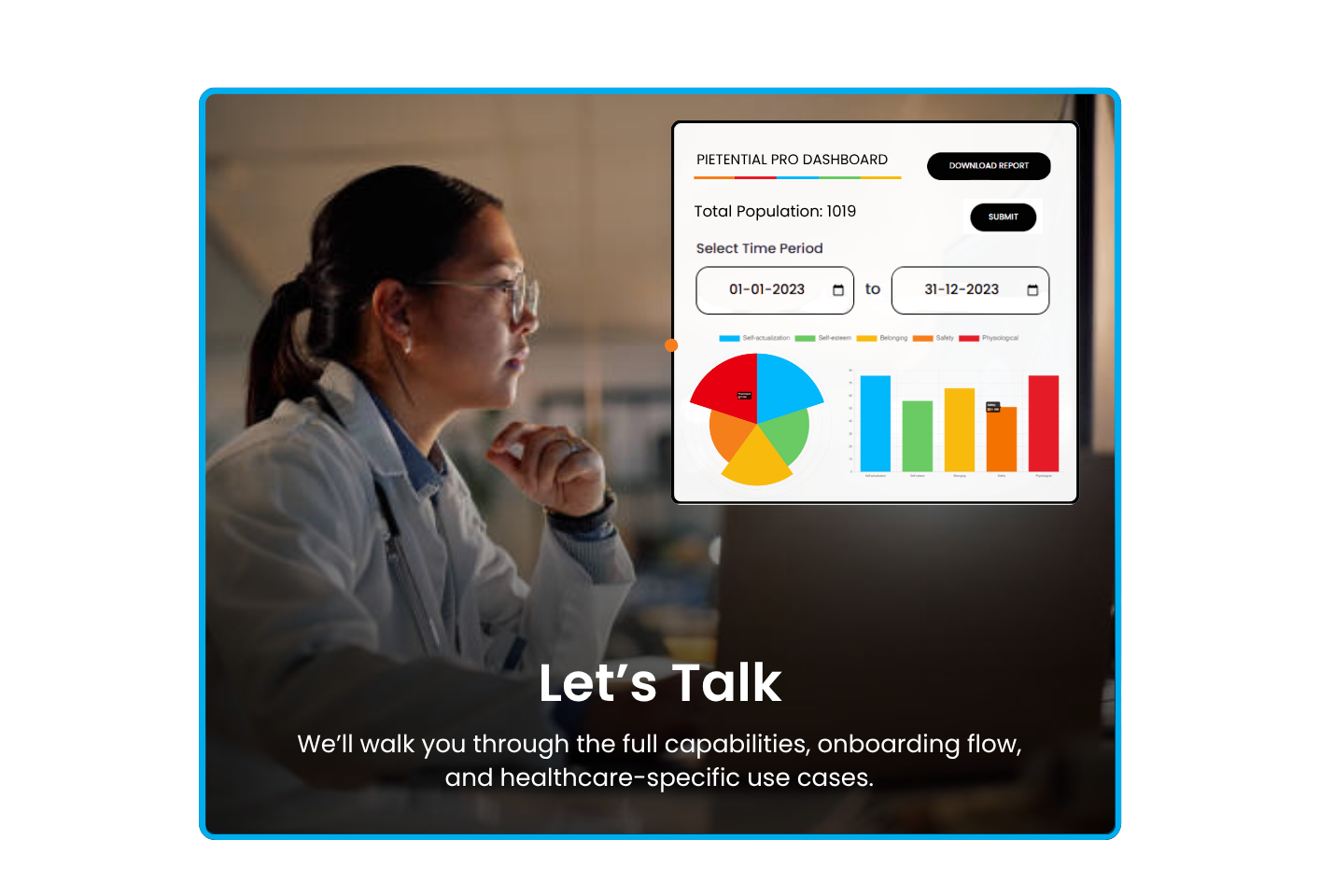
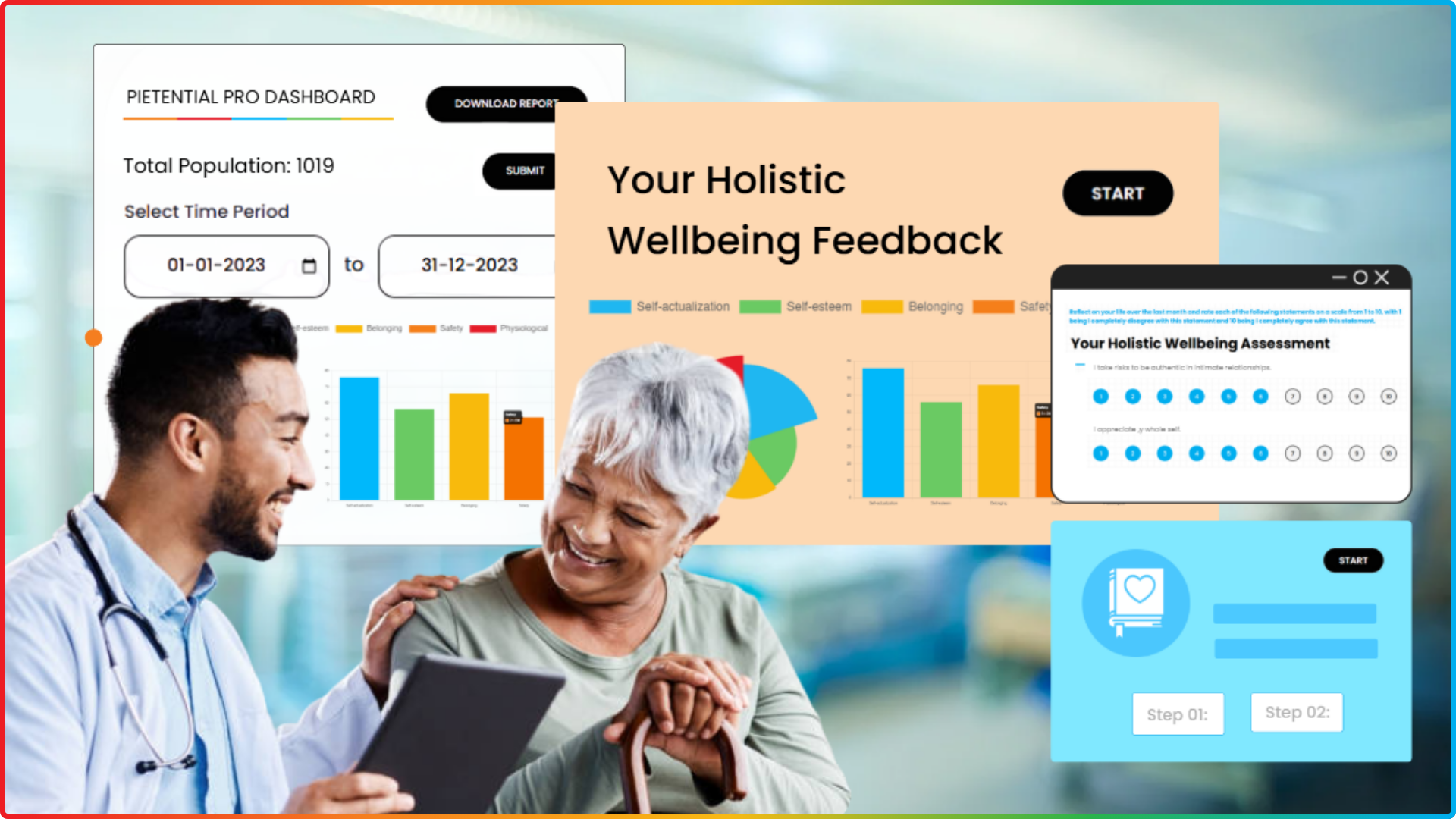
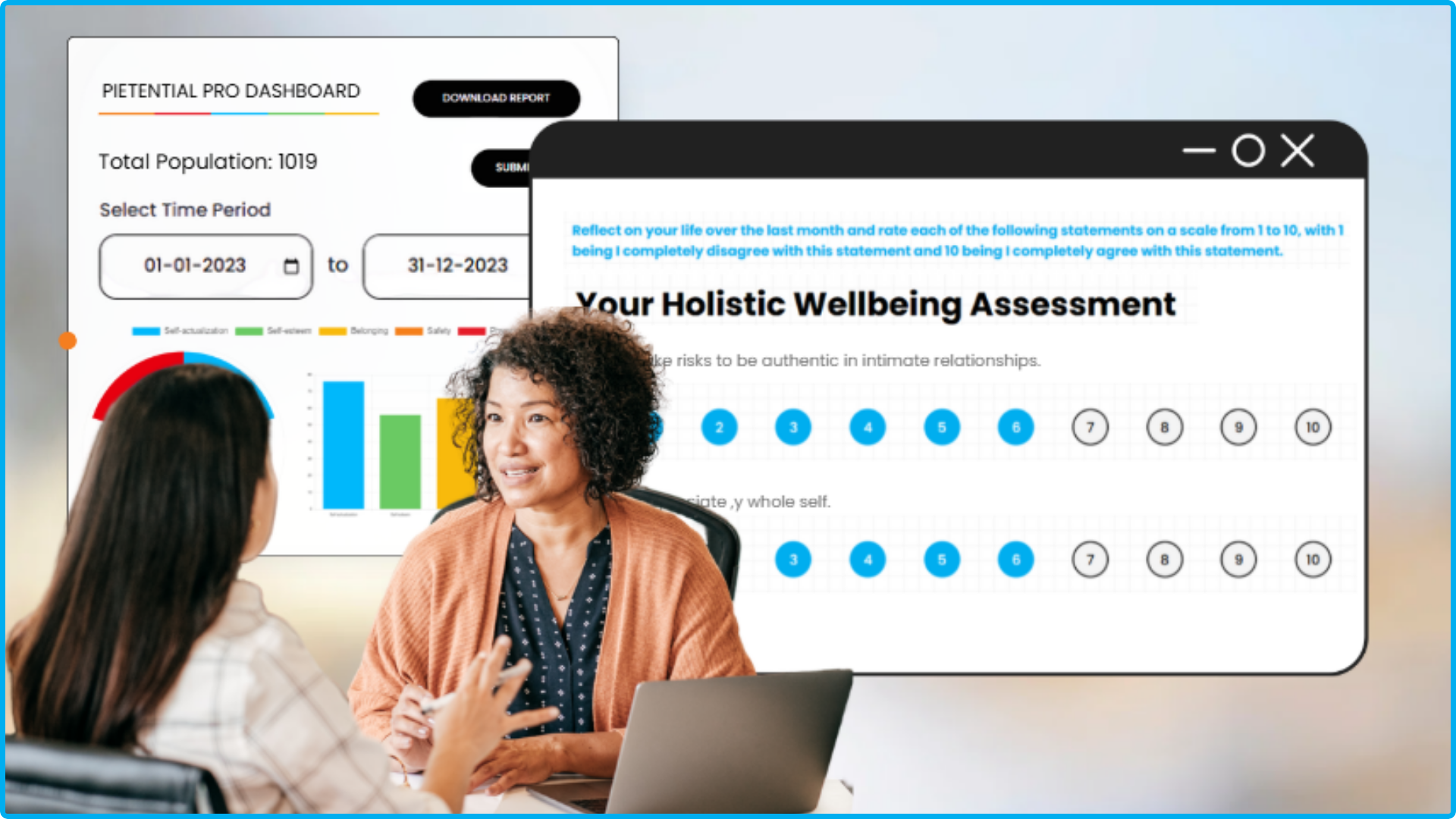
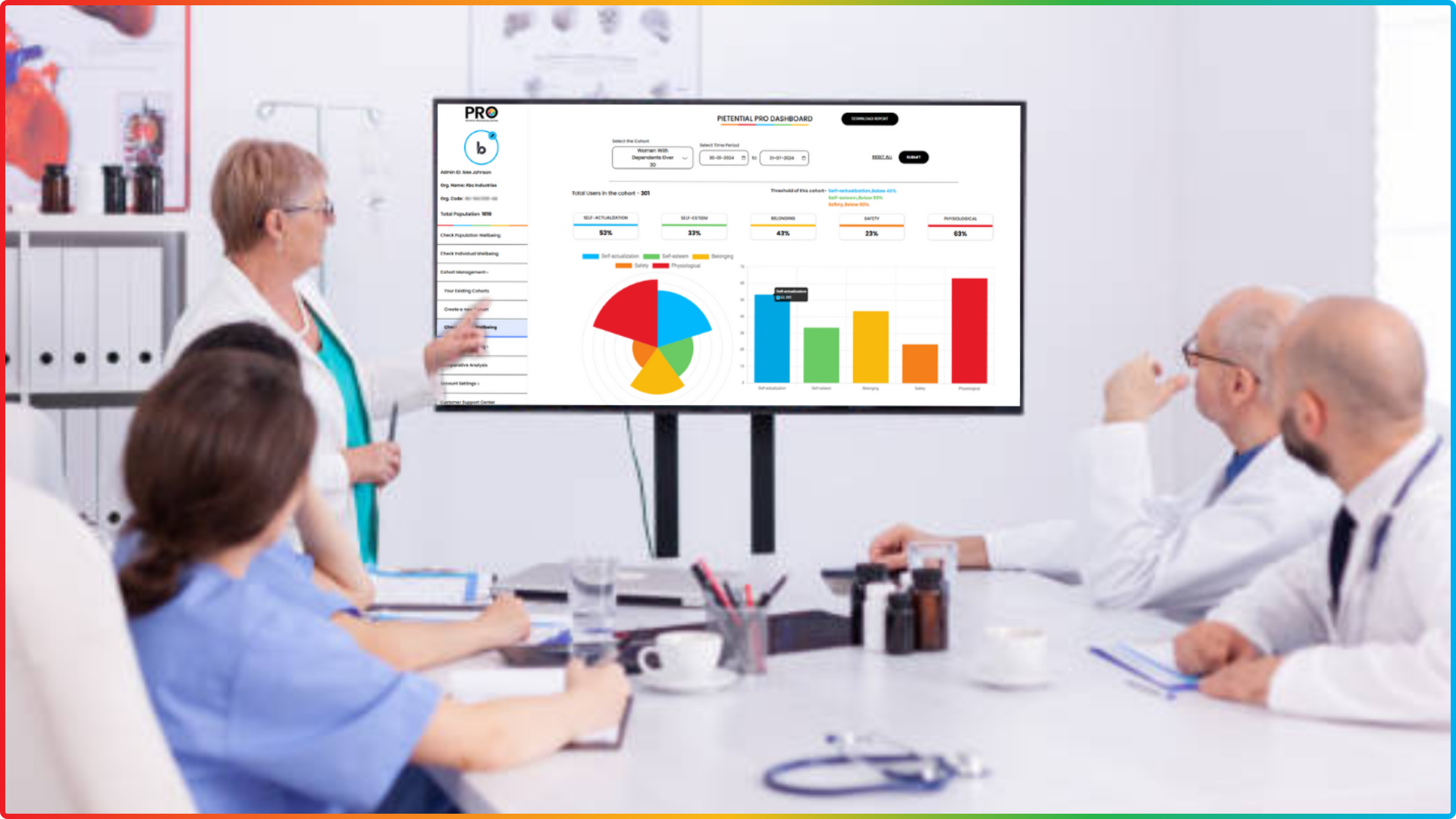
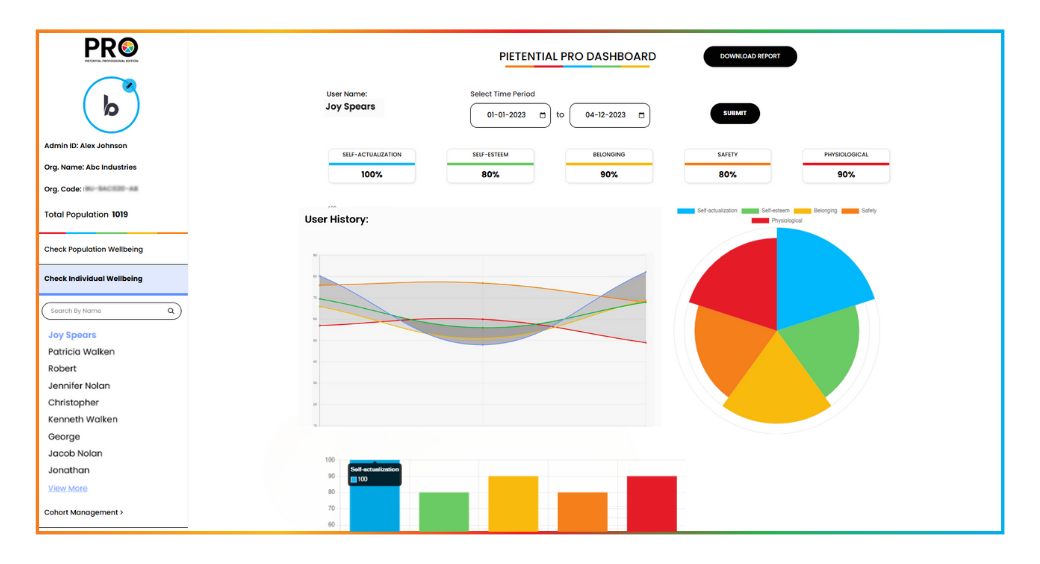
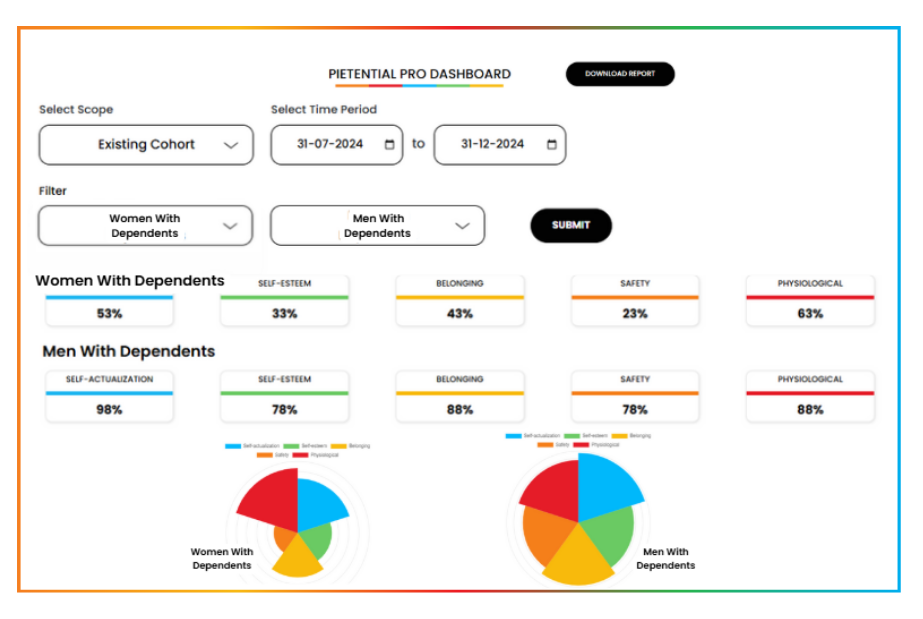
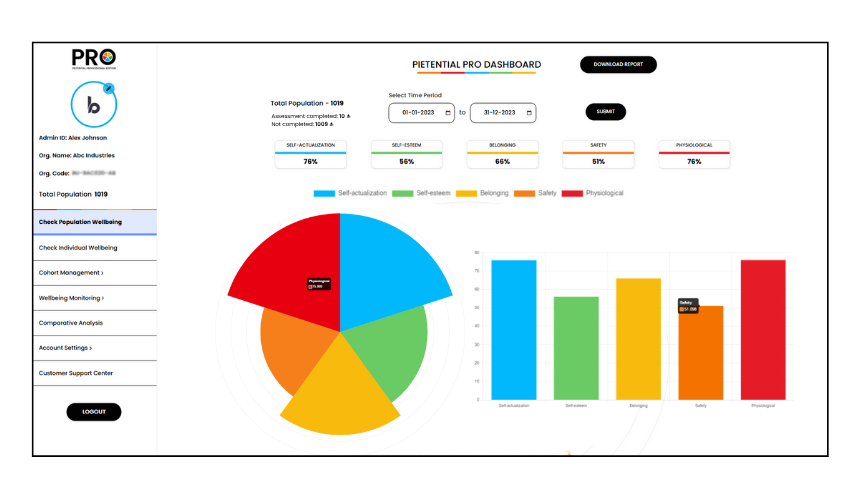
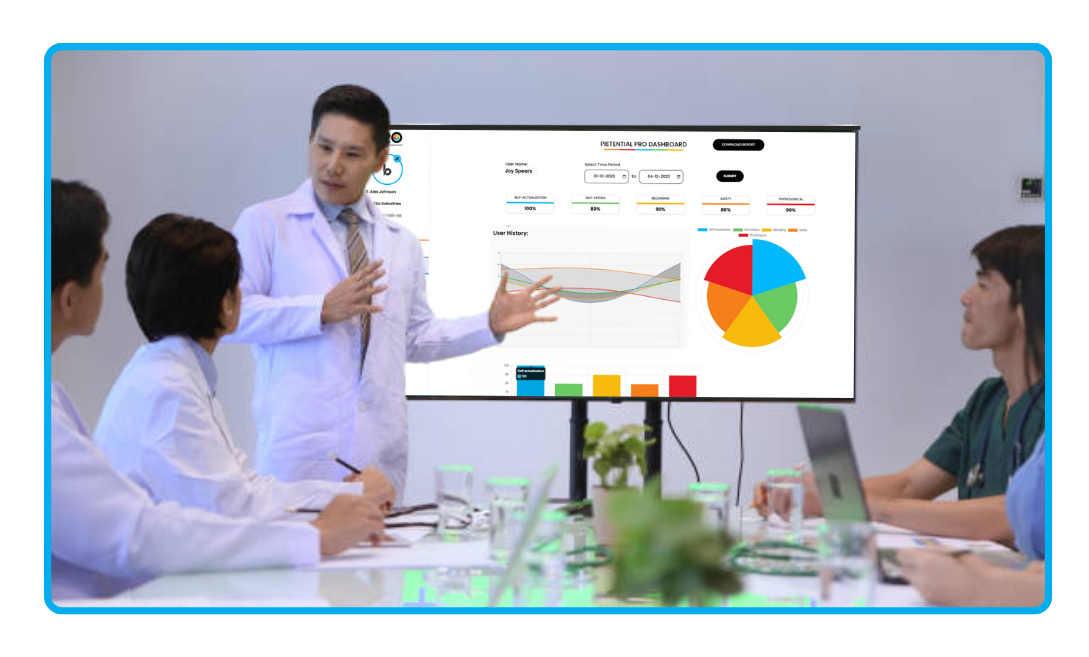
A user-friendly dashboard translates staff self-reports into measurable, visual insights. Leaders can track changes over time, compare wellbeing across cohorts, and evaluate the impact of new initiatives without additional IT burden.
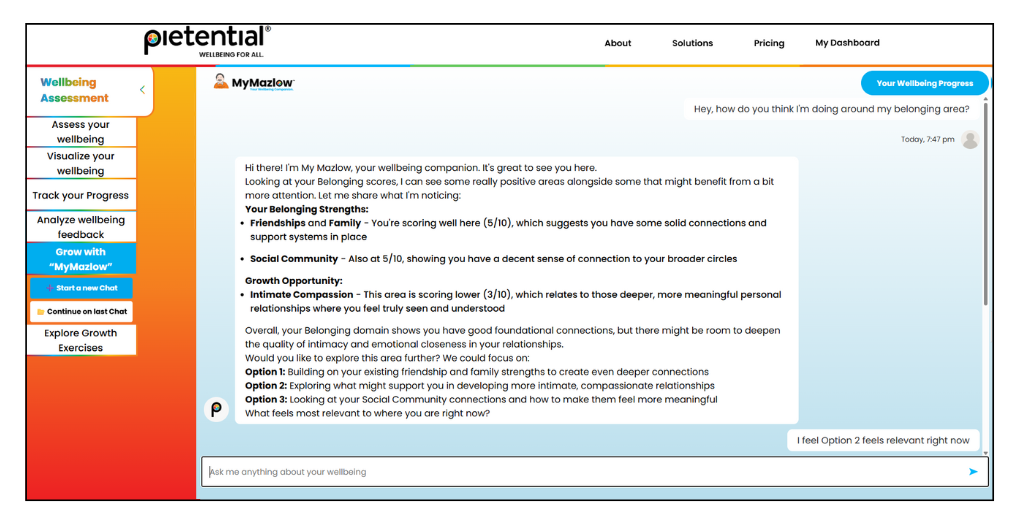
MyMazlow™ – Your Wellbeing Companion
MyMazlow™ is Pietential’s personal wellbeing companion. Based on each individual’s scores across domains and subdomains, it interacts with them in a supportive way — encouraging reflection, prompting self-awareness, and suggesting practical steps to strengthen resilience and balance. (Future releases will allow organizations to link employees directly to relevant internal resources, expected within the next release cycle, 90–120 days.)
Progress Monitoring and Alerts
Administrators can monitor wellbeing scores over time, set thresholds for alerts, and spot early warning signals of burnout, fatigue, or disengagement — enabling proactive, targeted action.
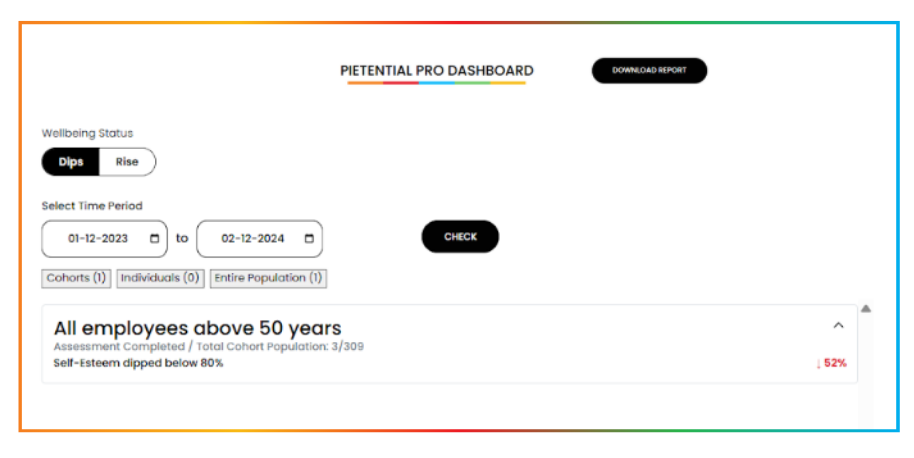
Segmentation and Comparative Analysis
Custom filters allow segmentation by role, department, shift schedule, or tenure. Hospitals can identify which groups are thriving and which may need support. Comparative views make it easy to evaluate the impact of operational changes, leadership initiatives, or new programs.
Confidential and Secure
All data is encrypted and GDPR-compliant. Pietential collects no PHI or HIPAA-reportable information, ensuring privacy and staff trust.
Launch in 3 Simple Steps
1. Share secure link or QR code
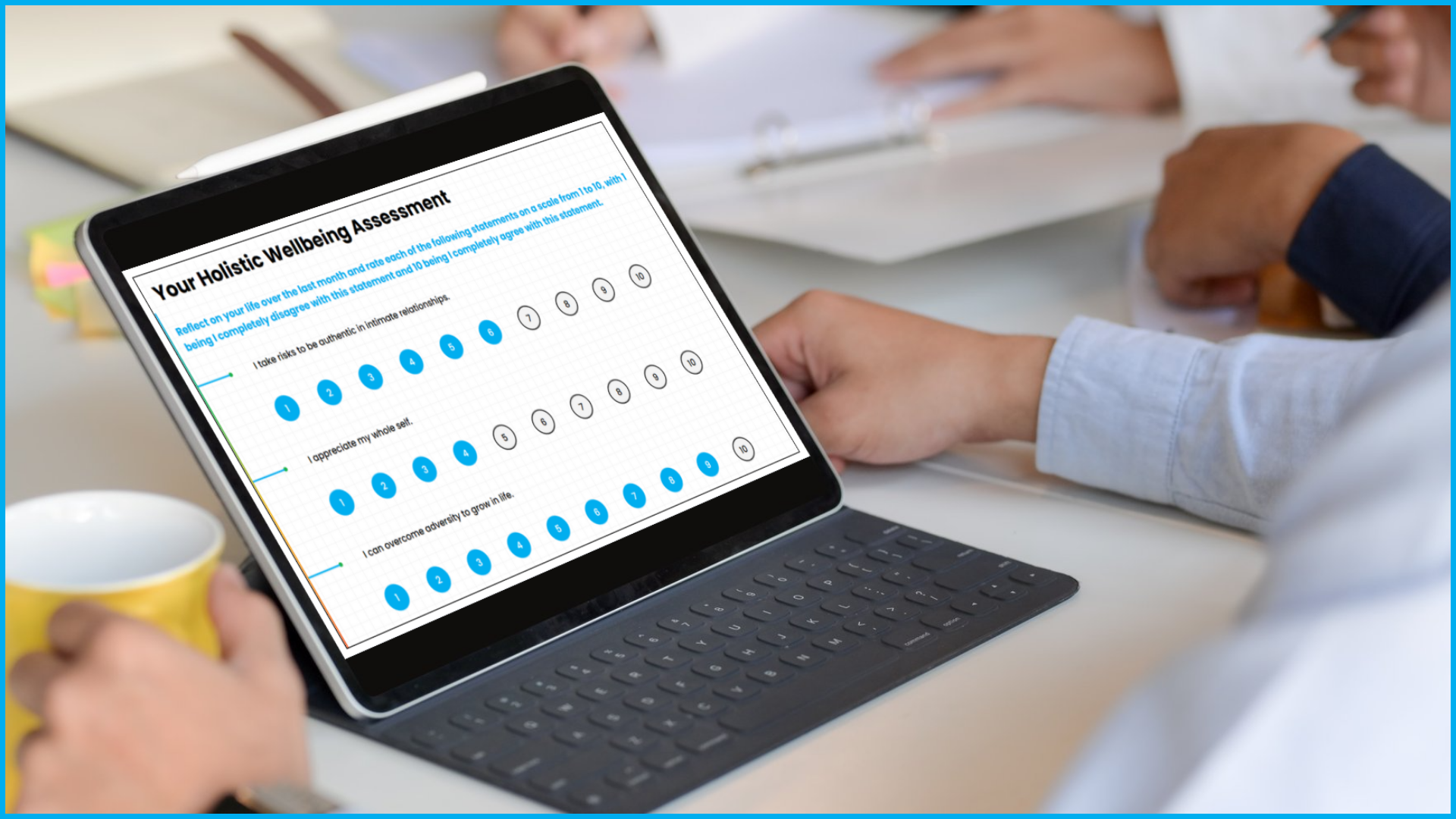
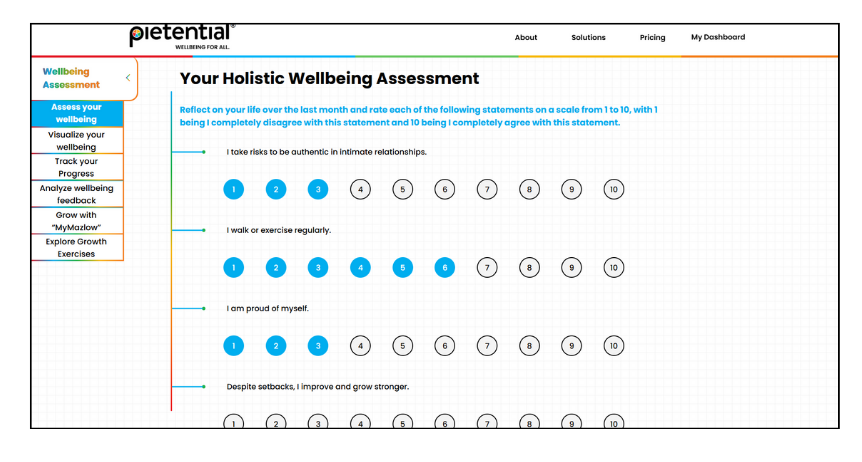
2. Staff complete the 3–5 minute assessment
3. Leadership dashboard goes live instantly
No integration or IT support required.
An Objective Wellbeing Intelligence Platform for People Leaders, Employees, and Unions
Pietential equips healthcare leaders to:
- Retain staff by addressing burnout before it drives resignations,
- Demonstrate duty of care to staff and accrediting bodies,
- Enhance patient safety indirectly by supporting frontline resilience, and
- Differentiate their hospital in a competitive labor market through a visible, data-backed commitment to staff wellbeing.
For unionized hospitals, Pietential can also serve as a neutral third-party source of workforce wellbeing data. Unions may use aggregate wellbeing insights as an objective bargaining tool, giving both unions and leadership a shared, non-subjective fact base to guide negotiations and workforce strategy.

Example Use Case: Night-Shift Nurse Scheduling Optimization
A 400-bed hospital deploys Pietential to baseline wellbeing scores. Assessments reveal critical dips in physiological needs and psychological safety among night-shift nurses.
Rather than relying on generic resilience workshops alone, leadership:
- Introduces targeted shift scheduling adjustments to improve rest cycles and team overlap, and
- Launches focused leadership development efforts to address psychological safety concerns.
90 days later, follow-up assessments show measurable improvements in physiological and safety domains. Turnover intent declines among the night-shift cohort, and leadership has clear, data-backed insights to refine future interventions.
From Workforce Crisis to Workforce Resilience
Burnout is not just an HR problem — it’s a patient safety risk. In a recent U.S. survey, 55% of healthcare workers reported plans to change jobs by 2026 (Reuters, 2025). Hospitals must move beyond surface-level metrics to understand and act on the true drivers of staff wellbeing.
Pietential offers a science-backed, easy-to-deploy solution that brings objective, predictive wellbeing intelligence to hospitals of any size. By integrating Pietential into workforce strategies, leaders can protect their staff, improve patient outcomes, and build a sustainable, resilient care culture.
By reducing preventable turnover and enabling targeted interventions, Pietential supports both clinical quality and financial sustainability — a critical priority for every hospital system today.