How Municipal Governments Can Leverage Wellbeing Intelligence to Strengthen Internal Teams and Improve Community Outcomes
Executive Summary
Municipal governments face unprecedented pressures—from rising demands for services and budget constraints to hiring and retention challenges and heightened public scrutiny. Traditional wellbeing initiatives—Employee Assistance Programs (EAPs), one-off wellness efforts, and periodic surveys—are fragmented, reactive, and reliant on lagging indicators like turnover or absenteeism.
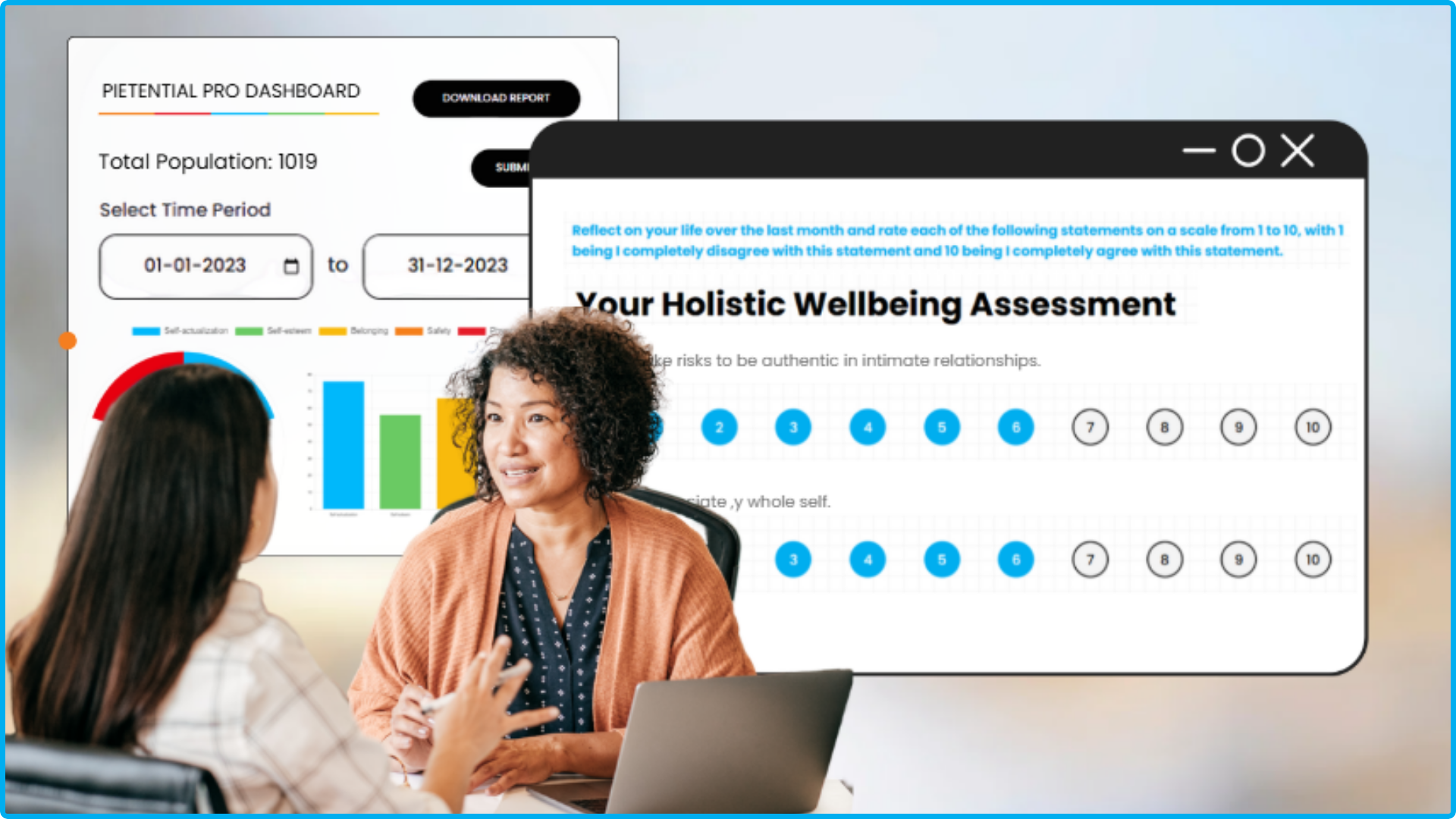
Pietential: The Wellbeing Intelligence Platform offers a science-backed, psychometrically validated approach, delivering real-time insights into employee wellbeing via dashboards, benchmarking, and growth exercises. Pietential enables leaders to monitor workforce wellbeing longitudinally, assess the impact of interventions, and detect risks before they escalate—elevating governance and strengthening service delivery.
Context / Problem Statement
Municipalities are navigating a workforce crisis. The 2023 State and Local Government Workforce Survey reports that 51% of HR managers frequently must reopen recruitments due to insufficient qualified candidates, and 36% report increased time to hire, while 59% of employees say they are considering leaving (National League of Cities, 2023; ICMA, 2023).
From March 2020 to March 2022, employment in local government dropped by more than 300,000 jobs—a 4.5% decline—far exceeding public and private sector averages (National League of Cities, 2022).At the same time, traditional supports are underutilized—EAP usage is consistently below 10%, often hovering around 5–7% (SHRM, 2022; ICMA, 2023)—indicating limited engagement with existing wellbeing resources.
Why This Matters Now
Municipal leaders are confronting multiple, converging pressures:
- Burnout and Overload: In lean organizations where staff “wear multiple hats,” burnout is pervasive. As ICMA notes: “When leaders foster trust and psychological safety, they help their teams thrive. That directly impacts retention.” (ICMA, 2025)
- Competitive Labor Market: The vacancy-to-hire ratio in state and local government is approximately 3.7:1, nearly two-and-a-half times higher than in the private sector (National League of Cities, 2024).
- Shifting Workforce Expectations: Modern public sector workers seek flexibility, work-life balance, and wellbeing support—areas where municipal roles often fall short (National League of Cities, 2024).
- Funding Constraints: While ARPA provided temporary relief, many municipalities still face long-term staffing and retention gaps (National League of Cities, 2022).
Wellbeing is not a side concern—it is a leading indicator of organizational resilience and public service quality.

Introduction to Pietential
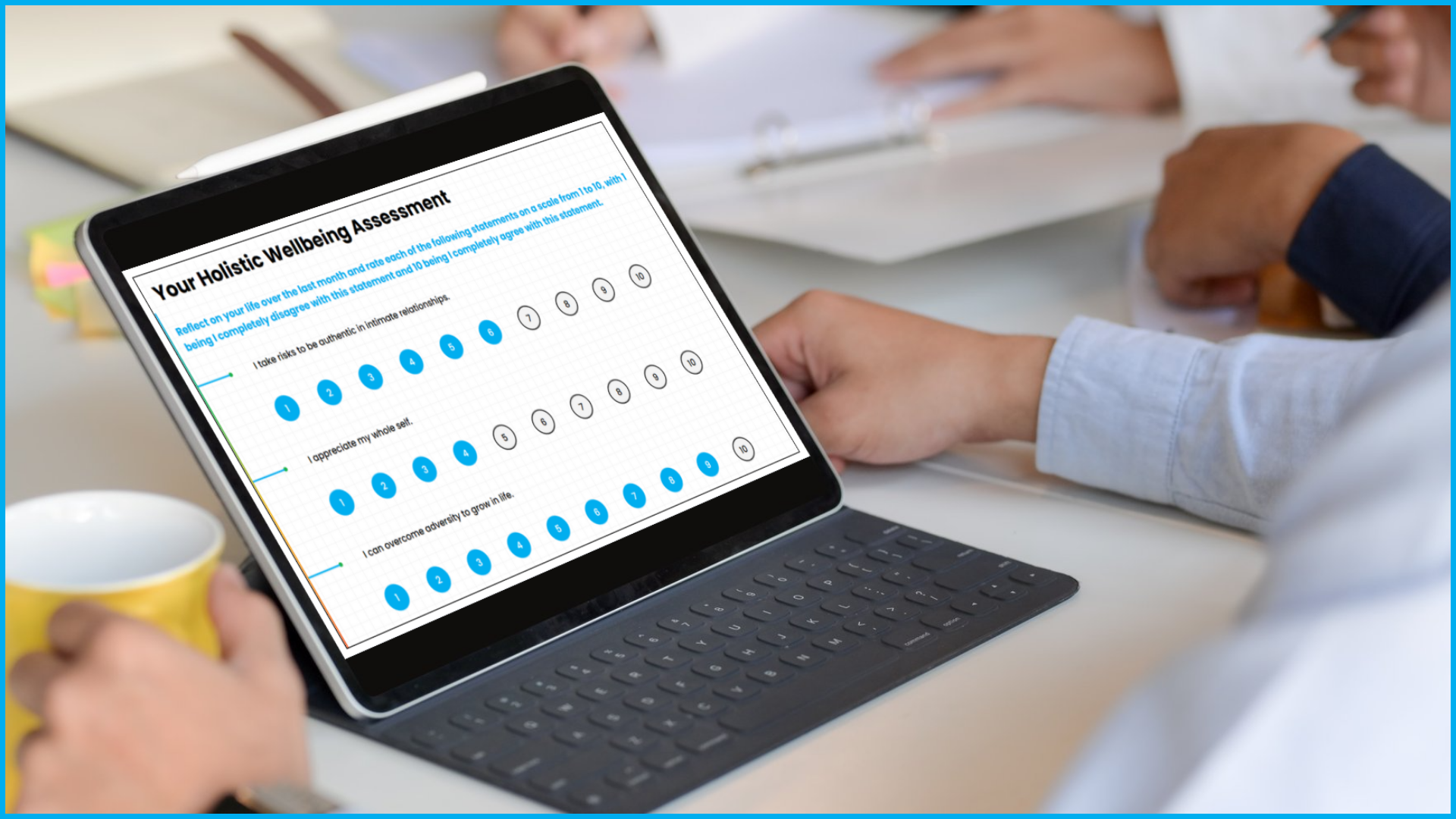
Pietential: The Wellbeing Intelligence Platform is a category-defining solution built to measure and enhance workforce wellbeing with scientific rigor:
- Structured as a non-hierarchical, pie-chart model based on Maslow’s framework.
- Delivered via a psychometrically validated assessment, not a conventional survey.
- Developed with clinical and psychometric oversight.
Core Components:
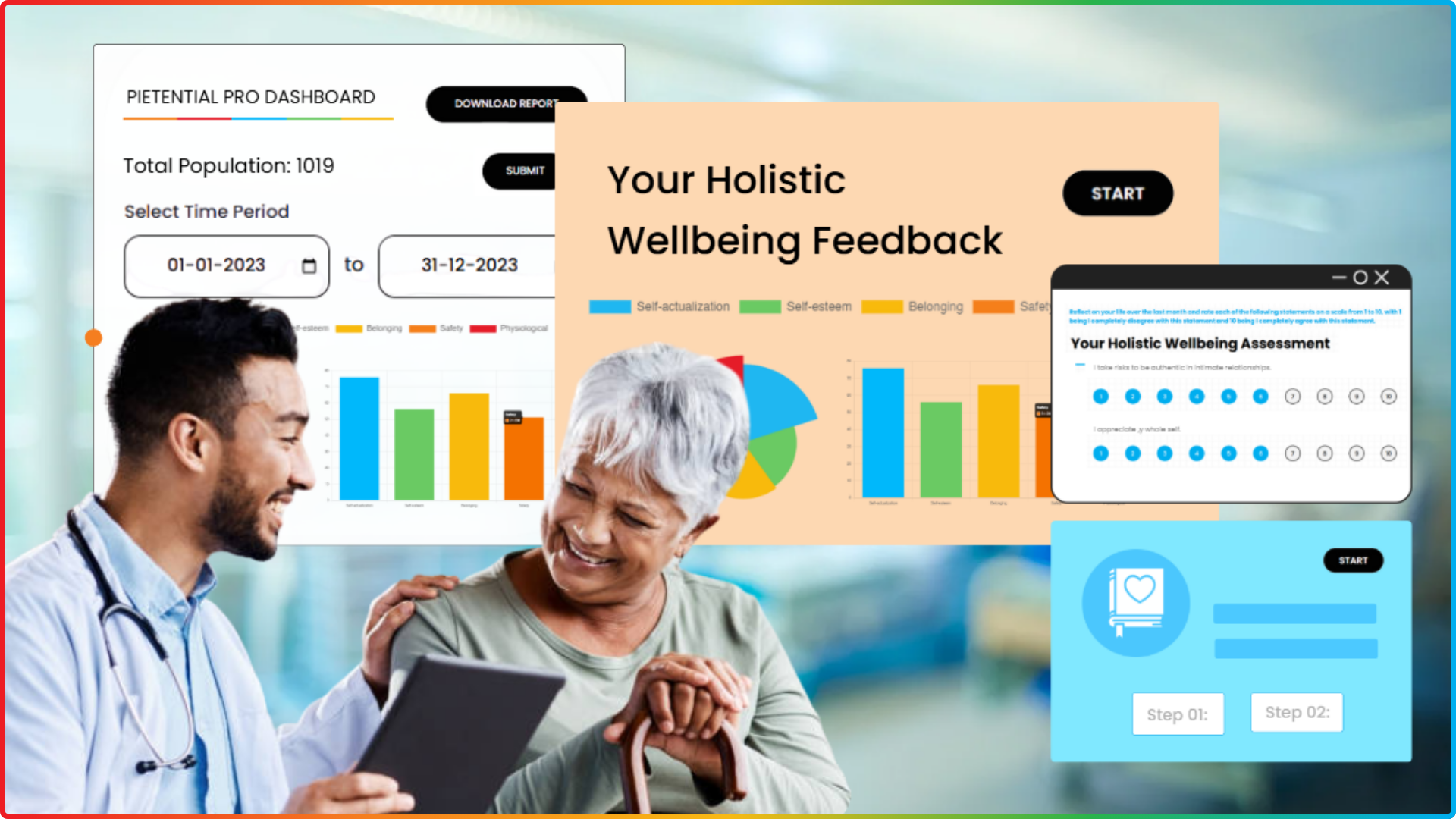
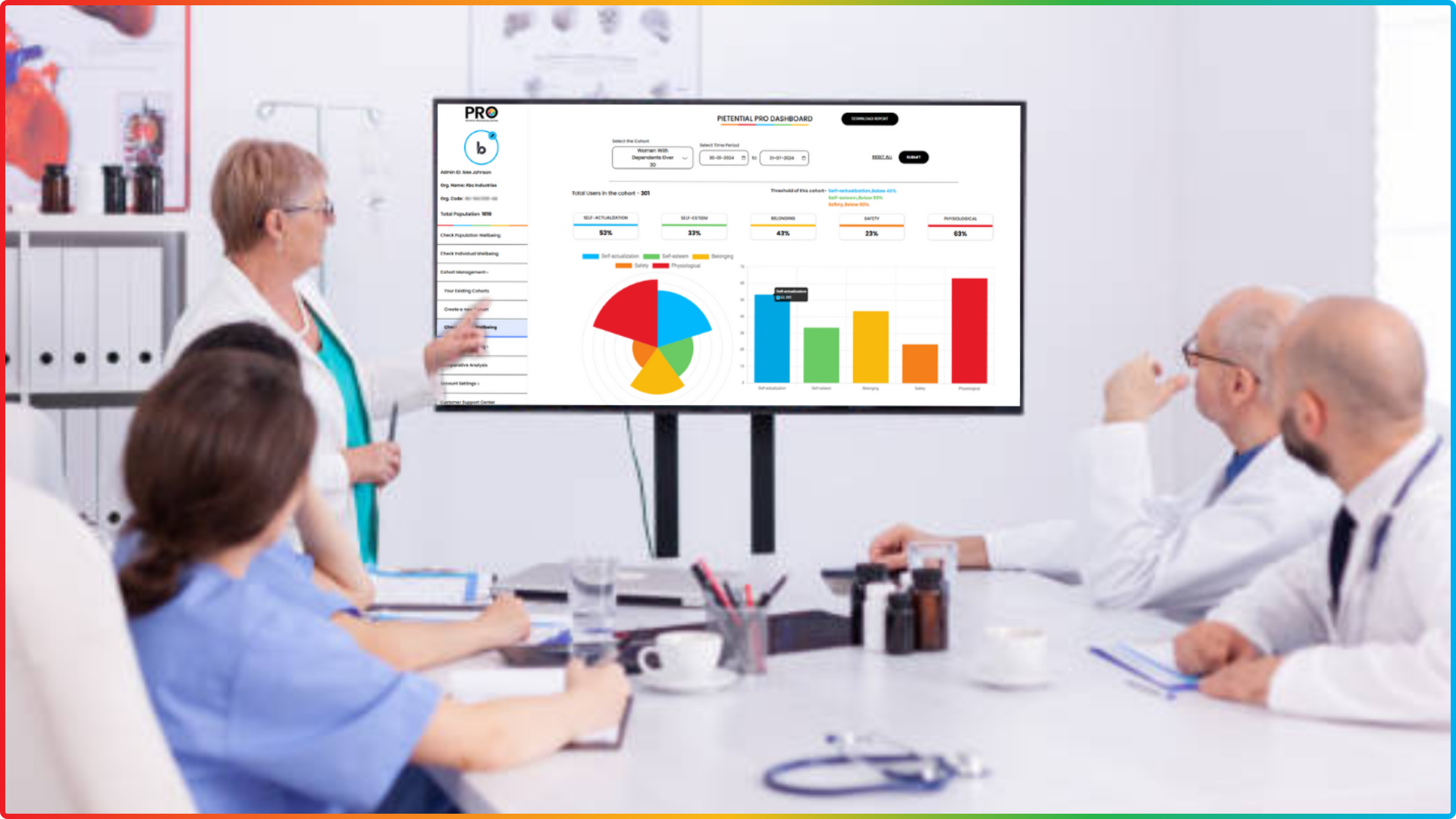
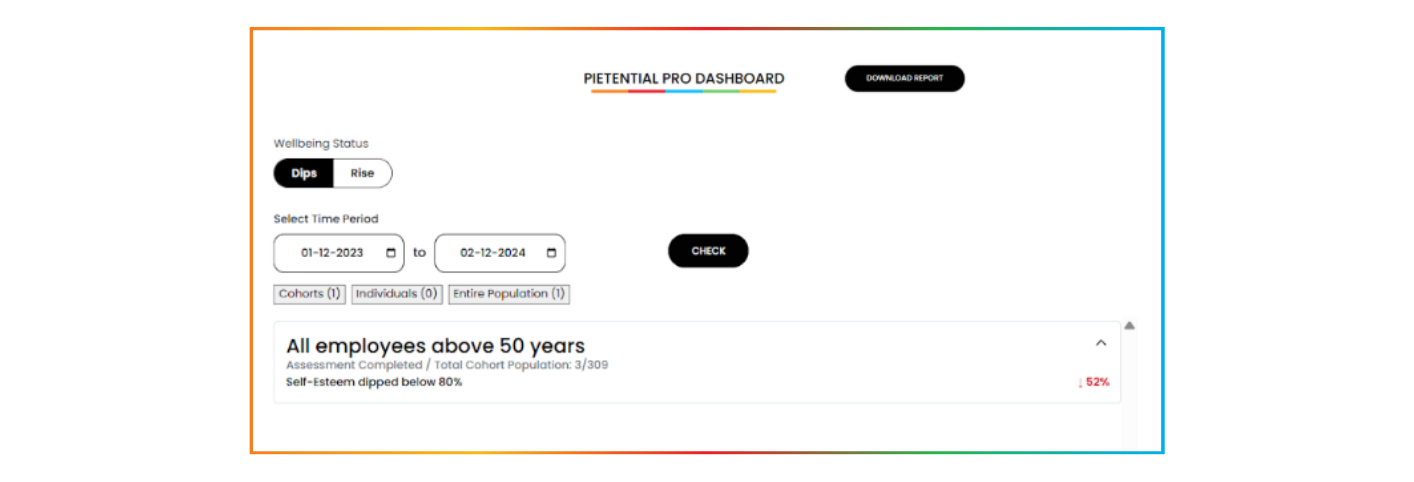
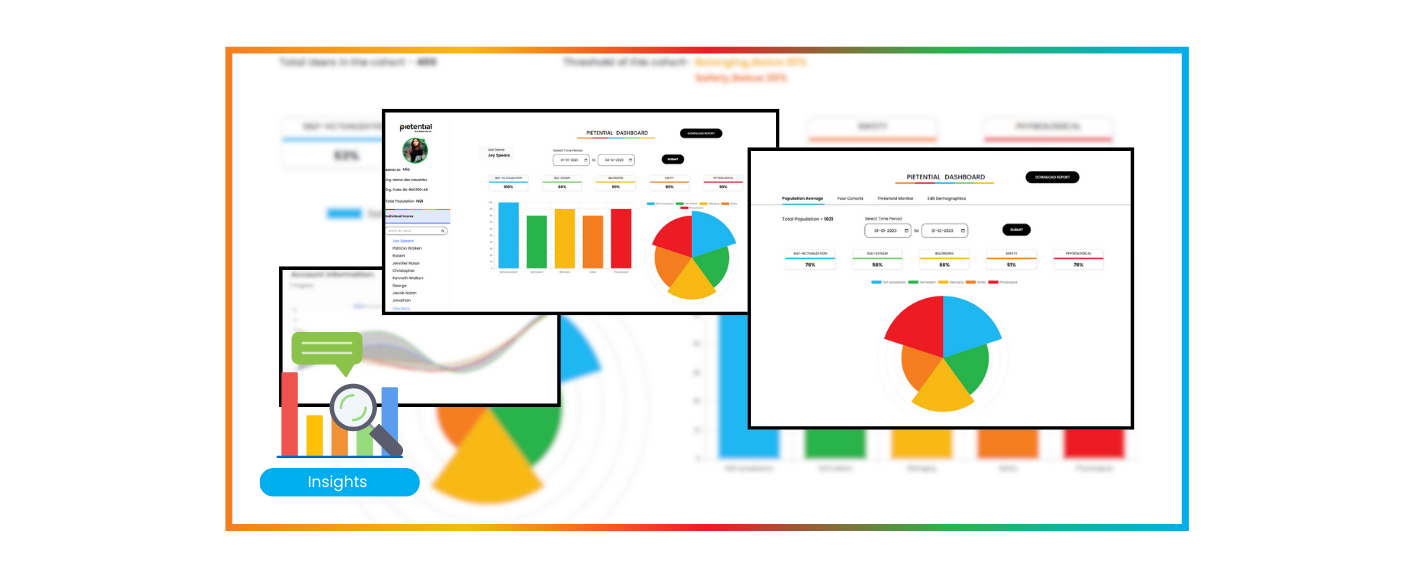
- Visualization: Intuitive pie-chart dashboards for immediate clarity.
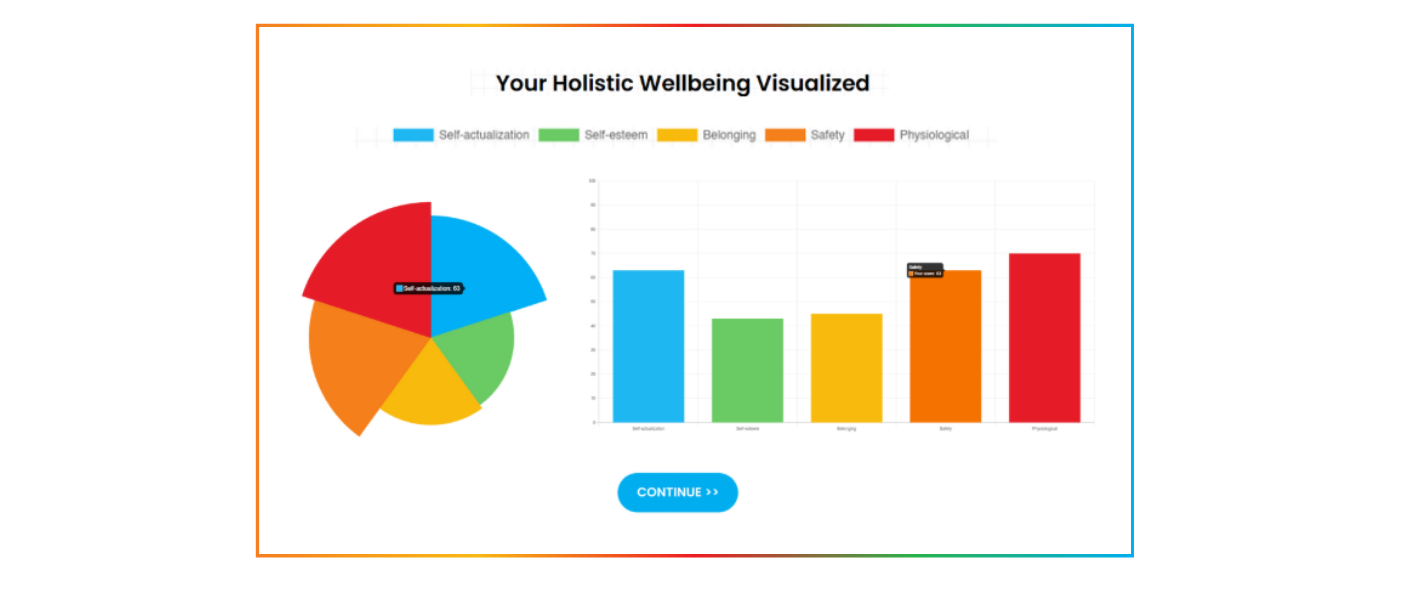
- Benchmarking: Cohort, demographic, and organizational comparison tools.
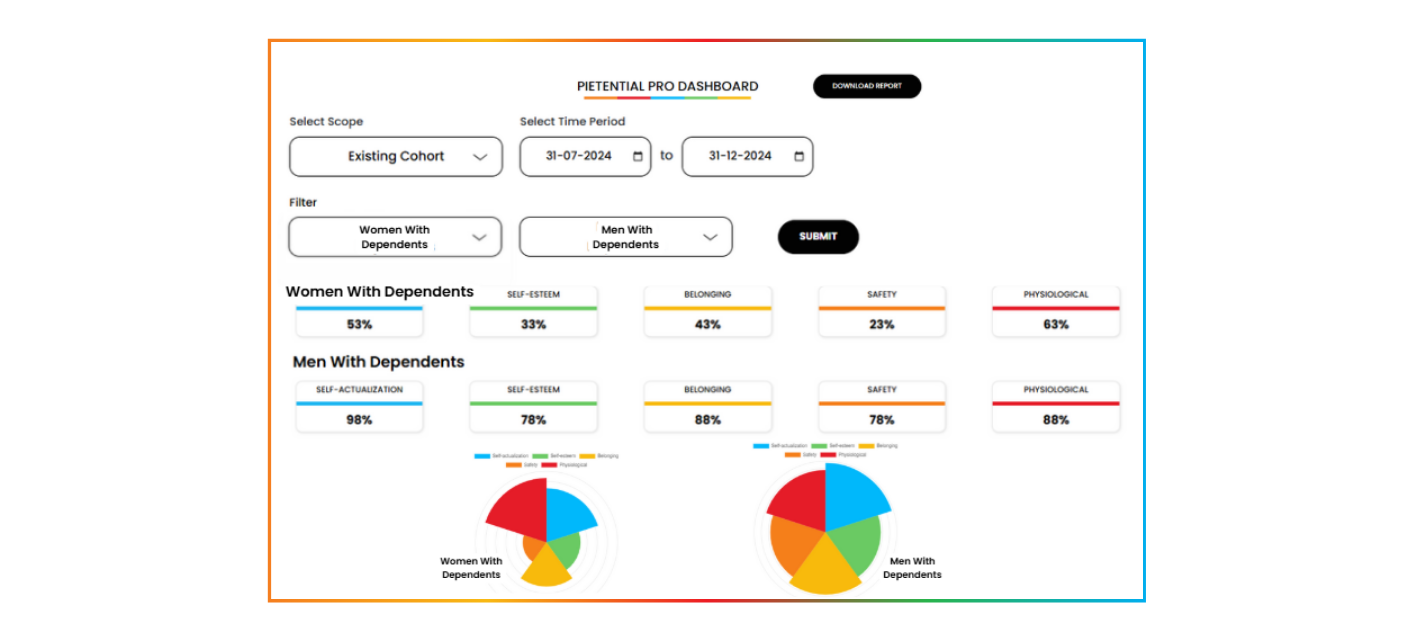
- Monitoring: Longitudinal data capture and automated alerts for early risk detection.
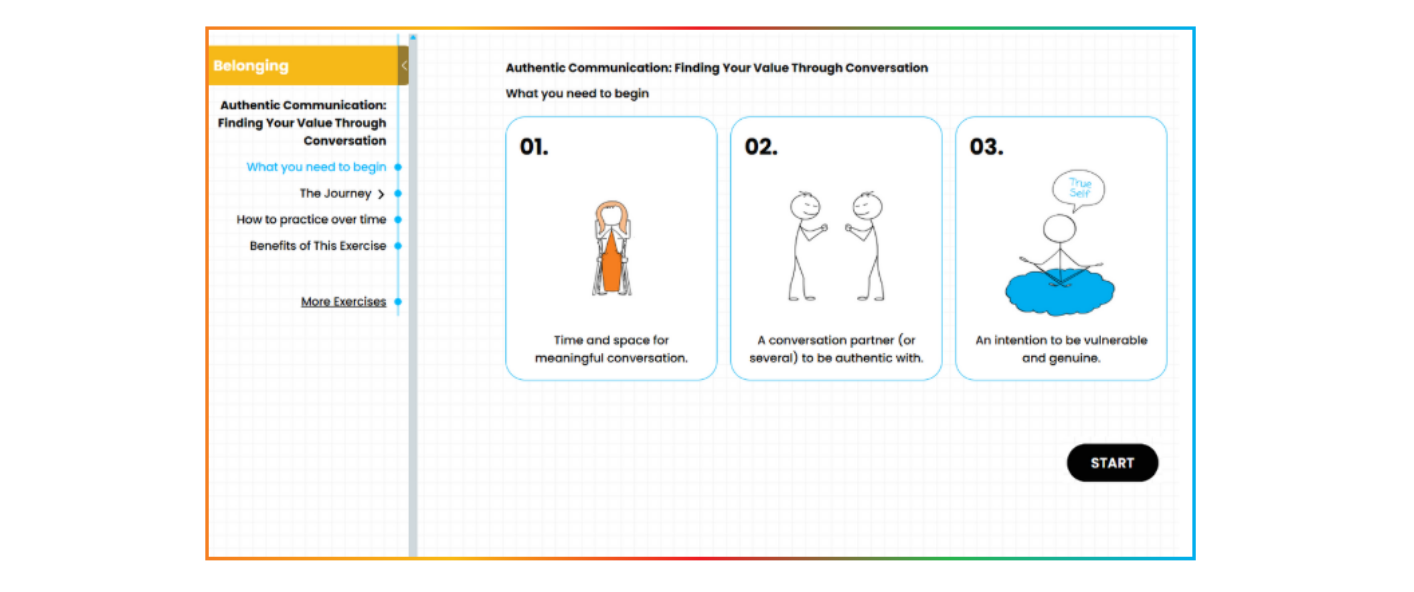
- Growth Exercises (“Actualize It”): Personalized development modules.
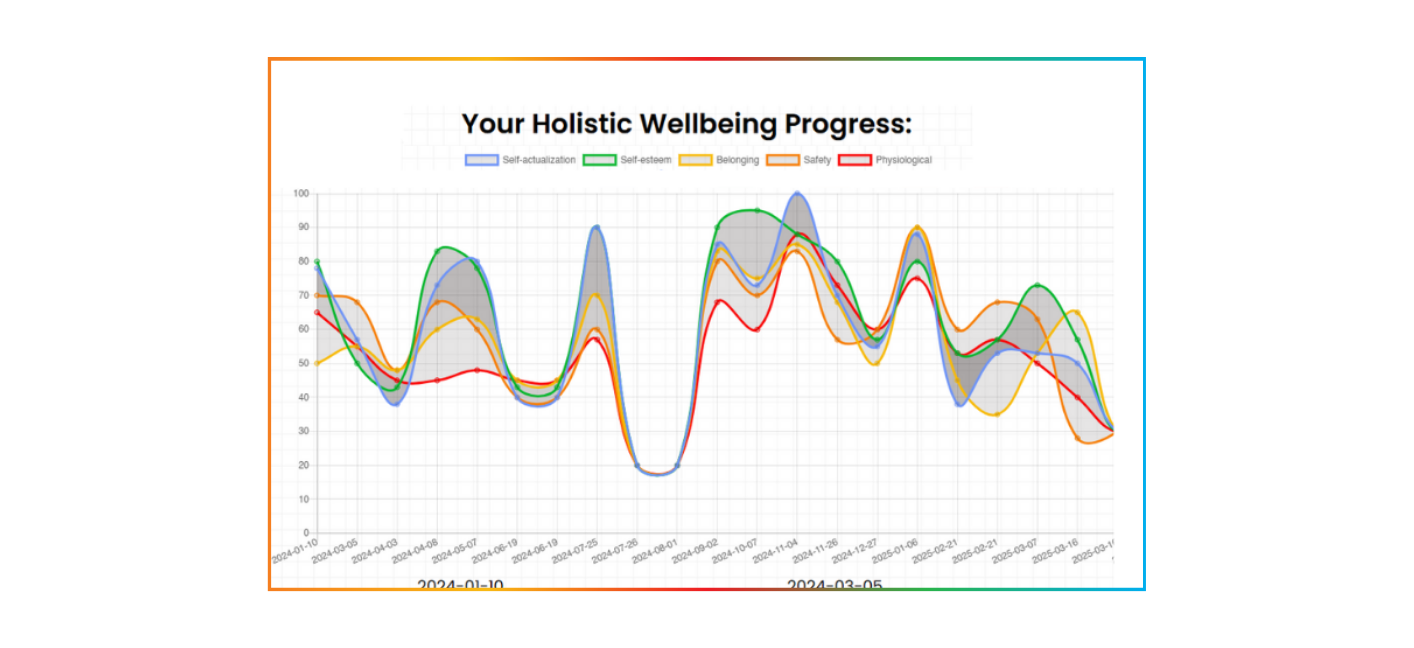
- Analytics: Tools for assessing program impact and wellbeing trends over time.
Features & Benefits
Features
- Validated assessment of five key wellbeing domains.
- Cohort and demographic filtering for granular insight.
- Real-time dashboard visualizations.
- “Actualize It” personalized growth modules.
- Automated wellbeing alerts.
- Departmental and demographic benchmarking.
- Longitudinal trend tracking.
Benefits
- Objective insights—eliminate guesswork in wellbeing-related decisions.
- Demonstrable impact—empower HR and leadership with data.
- Morale and engagement—bolstered through self-directed growth.
- Early risk detection—address issues before they spiral.
- Transparent accountability—for elected leaders and administrators.
Stakeholder Impacts
Police and Public Safety
- Challenges: High stress, burnout, exposure to trauma, public scrutiny.
- How Pietential Helps: Provides early alerts when wellbeing dips, supports resilience training, and demonstrates to the community that leadership is actively monitoring officer wellbeing.
Fire and Emergency Services
- Challenges: Demanding schedules, physical and emotional risk, long shifts, staffing shortages.
- How Pietential Helps: Measures wellbeing beyond physical fitness, captures morale and belonging, and supplies leaders with data to advocate for resources and staffing support.
Teachers and Education Staff
- Challenges: High turnover, increasing behavioral and emotional needs among students, pressure to deliver results.
- How Pietential Helps: Offers a non-intrusive way to measure and monitor staff wellbeing, giving administrators visibility into stress levels and providing teachers with growth exercises that support resilience.

Sanitation, Public Works, and Utility Workers
- Challenges: Physically demanding labor, often underappreciated roles, hazardous conditions.
- How Pietential Helps: Validates the importance of their wellbeing by measuring it, provides evidence for workload adjustments, and helps reduce costly absenteeism.
Administrative and Clerical Staff
- Challenges: Often overlooked, though they bear the brunt of citizen frustration and bureaucratic workload.
- How Pietential Helps: Tracks wellbeing among these vital but invisible workers, provides self-development resources, and enables managers to recognize stress before disengagement or turnover occurs.
Elected Officials and Department Leadership
- Challenges: Balancing political expectations, budget constraints, and community pressures.
- How Pietential Helps: Supplies an objective, science-backed dataset to justify decisions, demonstrate accountability, and validate policy or budget allocations with measurable wellbeing outcomes.

The Case for Employee Wellbeing
Wellbeing is foundational—not optional. When municipal employees feel psychologically safe, supported, and empowered:
- Organizational morale improves.
- Turnover and absenteeism decline.
- Service delivery stabilizes.
- Communities thrive through reliable, high-quality government.
Pietential is the only platform that makes holistic employee wellbeing measurable and actionable. It provides the objective, science-backed infrastructure municipal leaders need to navigate the complex challenges ahead with confidence.
Conclusion / Call to Action
Municipal governments are tasked with maintaining service quality, workforce resilience, and public trust—often with limited resources. Yet one critical tool is missing: the ability to measure and act on employee wellbeing in real time.
Pietential fills that gap, delivering validated wellbeing measurement, intuitive dashboards, and predictive insights. Because thriving municipal employees are the cornerstone of thriving communities—and with Pietential, that becomes measurable.
Citations
- ICMA (2023). Mental Health: A Retention Issue.
- ICMA (2025). The Wellbeing Imperative in Local Government Leadership.
- National League of Cities (2022). The Municipal Workforce Through the Pandemic.
- National League of Cities (2023). The Public Workforce Recruitment Challenge.
- National League of Cities (2024). Attracting and Retaining Talent in City Government.
- SHRM (2022). Employee Assistance Program Utilization Report.