
How Mental Health Practitioners Use Pietential to Empower Clients and Measure Progress with Precision
Introduction
In a field built on empathy, nuance, and deep understanding, mental health practitioners know that healing isn’t linear, and progress isn’t always obvious. While therapy and coaching are inherently qualitative, clients increasingly seek tangible outcomes and measurable growth.
Built by Experts. Grounded in Science.
With a science team led by by Dr. Amy Athey, a licensed clinical and performance psychologist and a national expert in human performance, wellbeing, and resilience, Pietential is built on decades of applied expertise and psychometric rigor.
At its core is the Pietential Holistic Wellbeing Index—a validated, reliable, research-backed wellbeing measurement tool grounded in a reimagined Maslow’s “Hierarchy” of Needs. This framework translates complex human experiences into clear, visually articulated, actionable insights, helping practitioners support personal growth across life domains.
Pietential is designed to complement clinical and coaching practices by transforming wellbeing data into strategic, actionable insight. It’s a Wellbeing Intelligence Platform that empowers psychologists, counselors, coaches, and mental health advisors to assess where clients stand, co-create goals, and measure the impact of their work with clarity and confidence. Practitioners use Pietential not only to assess where clients are, but to collaboratively chart where they’re going—and measure how far they’ve come.

The Use Case: Turning Insight into Action with One Simple Tool
Here’s how practitioners are integrating Pietential across the client journey:
Pre-Treatment Baseline
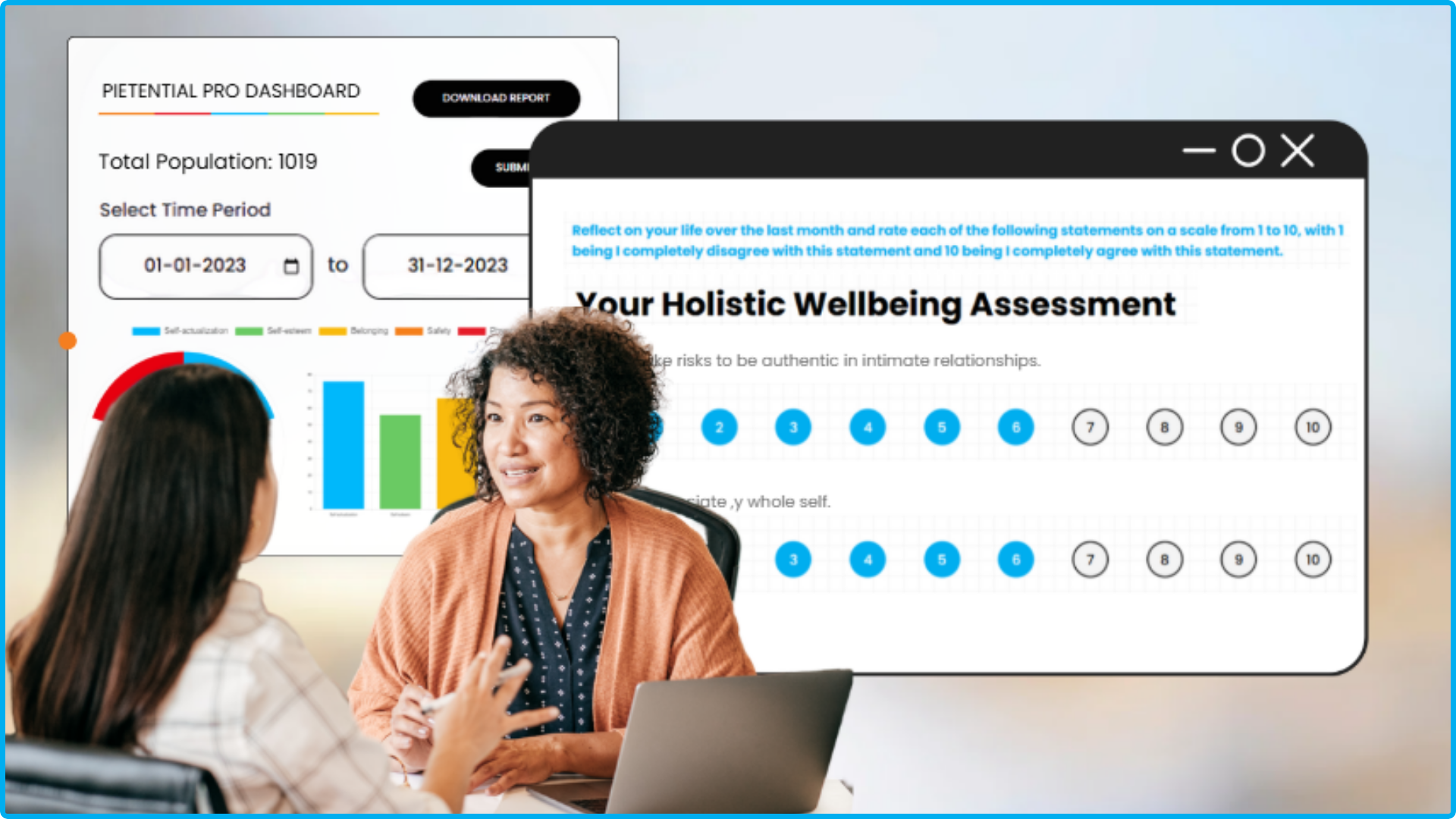
Before beginning a therapeutic or coaching engagement, clients complete Pietential’s quick (less than 5 minutes) science-backed holistic wellbeing assessment. The output is a visual map of the individual’s holistic wellbeing across five core domains and 20 subdomains.
Collaborative Goal-Setting
During the initial sessions, the practitioner and client review the results together. Low-scoring areas are correlated with the client’s presenting concerns—such as anxiety, low self-worth, or lack of purpose—and become the foundation for setting therapeutic or developmental goals.
During Treatment Period
As treatment progresses, Pietential remains in the background, while the practitioner applies their preferred modalities—CBT, ACT, coaching, trauma-informed care, or others. The initial assessment results can be referenced to validate client insights, track emotional shifts, or revisit earlier struggles (“Remember how low your Belonging score was when we started?”).
Post-Treatment Reassessment
At the end of the program or treatment period, the client retakes the Pietential assessment. Comparing the new results to the baseline provides a powerful picture of change—reinforcing progress and guiding future direction, whether that’s continuation, closure, or a revised focus.
Ongoing Maintenance or Referral
Clients retain access to their wellbeing dashboards, empowering them to self-monitor and re-engage when needed. Practitioners can also use the reassessment as a tool for periodic check-ins or continuity of care.

Why This Matters for Psychologists and Practitioners
- Make the Invisible Visible
Progress in mental health is often gradual and intangible. Pietential offers concrete markers of change, giving both clients and practitioners visual, trackable evidence of growth. - Build Better Treatment Plans
Assessment results guide therapeutic direction. For instance, a low Purpose score may indicate a need for existential exploration, while dips in Psychological Safety can inform trauma-informed approaches. - Increase Client Engagement
Data visualization encourages self-reflection and involvement. Clients feel seen and empowered when they co-interpret their scores and contribute to the goal-setting process. - Demonstrate Impact
Whether operating a solo practice, group clinic, or institutional program, Pietential enables measurable tracking of outcomes, useful for client validation, funder reporting, and program improvement. - Spot Issues Early
Periodic reassessments help flag dips in wellbeing before they become critical, supporting early intervention and better long-term outcomes.
What Is Measured?
Pietential’s assessment provides a multidimensional picture of human wellbeing, grounded in Maslow’s Hierarchy of Needs. Each of the five domains includes four subdomains, allowing for a nuanced understanding of a client’s wellbeing profile.
- Physiological Needs: Nutrition, sleep, activity, environment
- Safety: Physical, psychological, dwelling, and spiritual safety
- Belonging: Family, friendships, social community, intimate compassion
- Self-Esteem: Mastery, identity, self-confidence, self-worth
- Self-Actualization: Mindset, openness, social curiosity, purpose
Tools for You and Your Clients
- Visual Dashboard
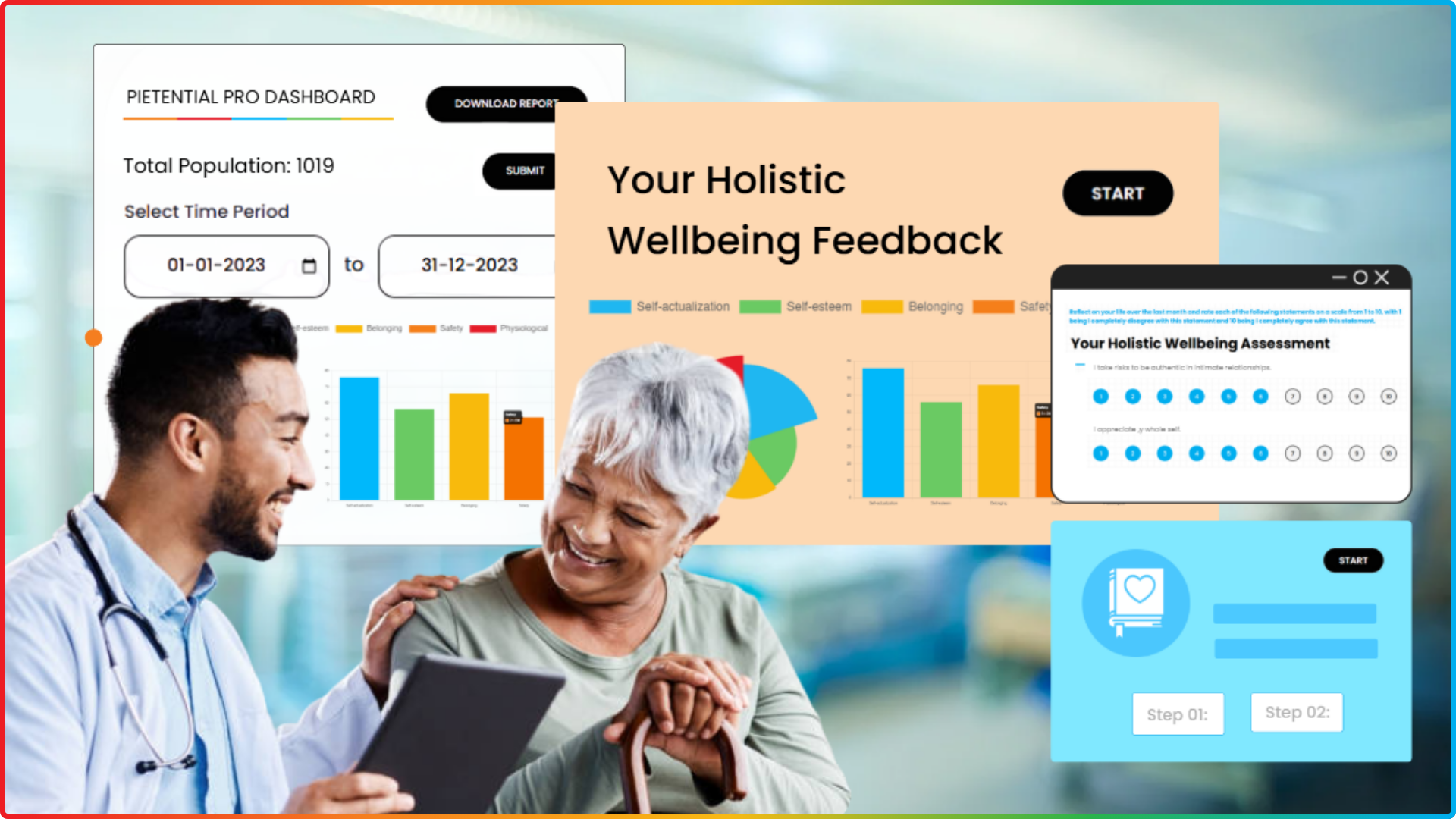
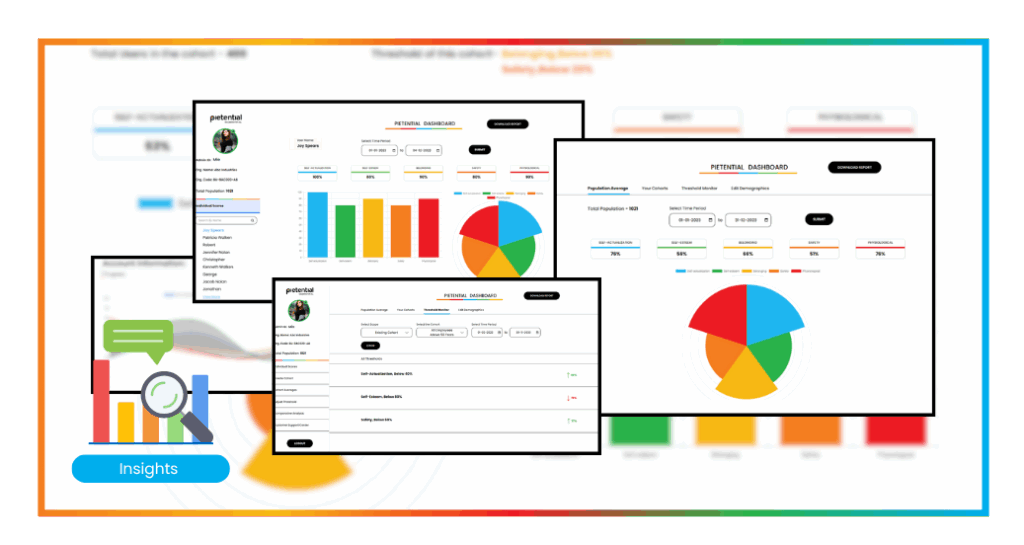
Pietential provides a user-friendly, client-facing dashboard that turns subjective self-reporting into clear, visual insights. This fosters deeper reflection, promotes open conversation, and helps both practitioner and client stay aligned on goals and progress over time.
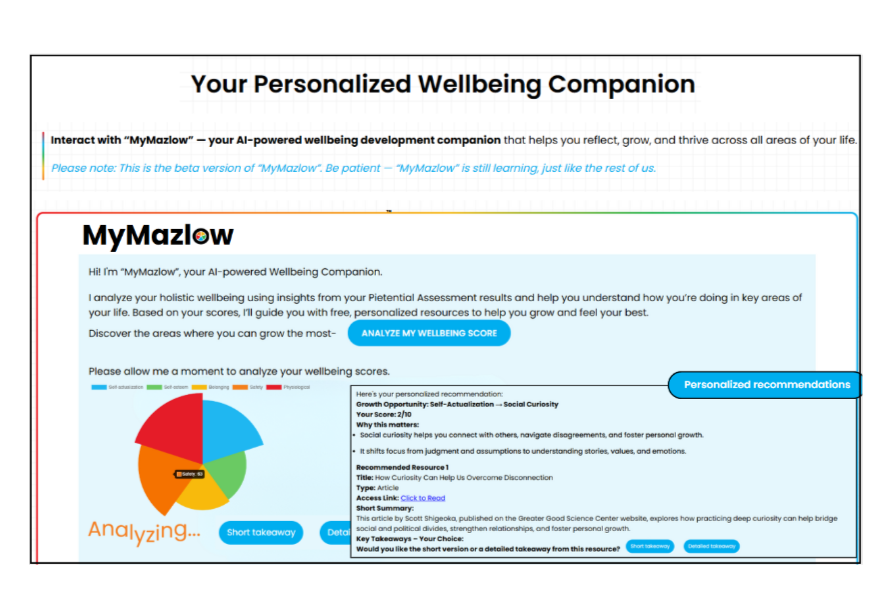
- MyMazlow™
This AI-powered recommendation engine analyzes wellbeing results and curates a personalized feed of content—ranging from articles and videos to provider-added materials—based on the client’s most underdeveloped areas. It encourages independent exploration while supporting structured guidance.
- Progress Tracking and Alerts
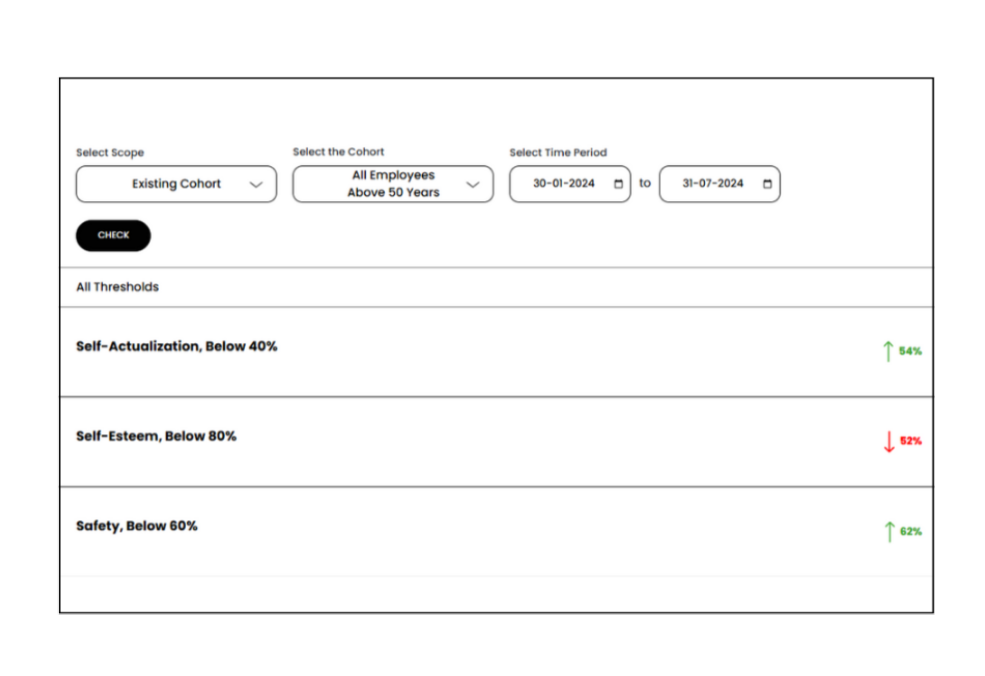
Practitioners can monitor changes in wellbeing over time, set thresholds to receive alerts if a client’s score drops, and identify early signs of disengagement or emotional downturn.
- Identify Trends and Patterns Across Demographics
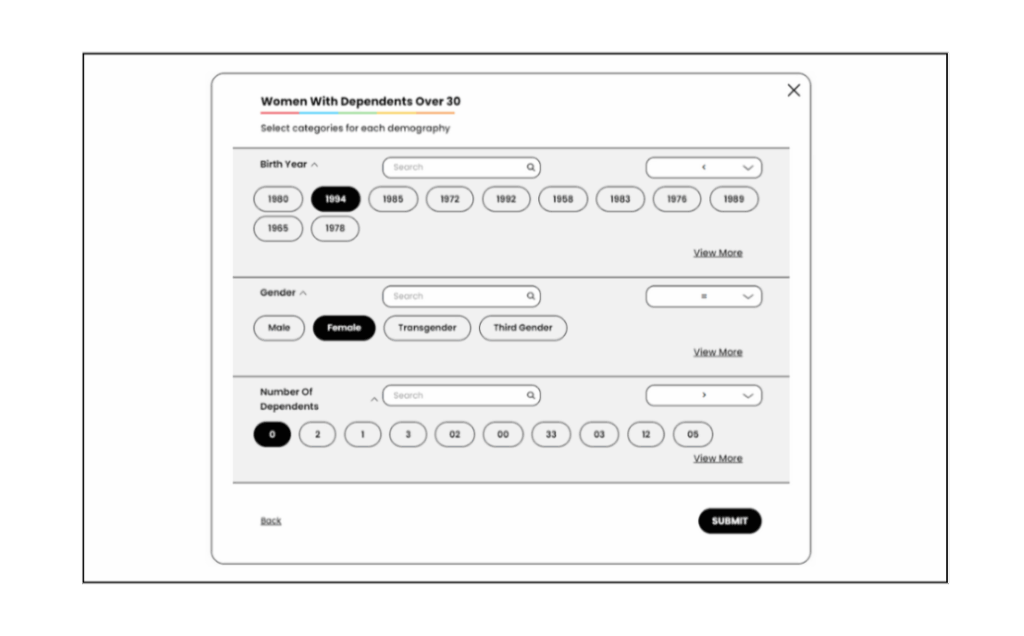
Pietential allows practitioners working with cohorts or larger populations to apply custom demographic filters. These filters make it easy to analyze wellbeing trends by group type, region, age, gender identity, job function, or any other key characteristic, enabling more tailored insights, targeted interventions, and equitable support strategies.
- Comparative Analysis
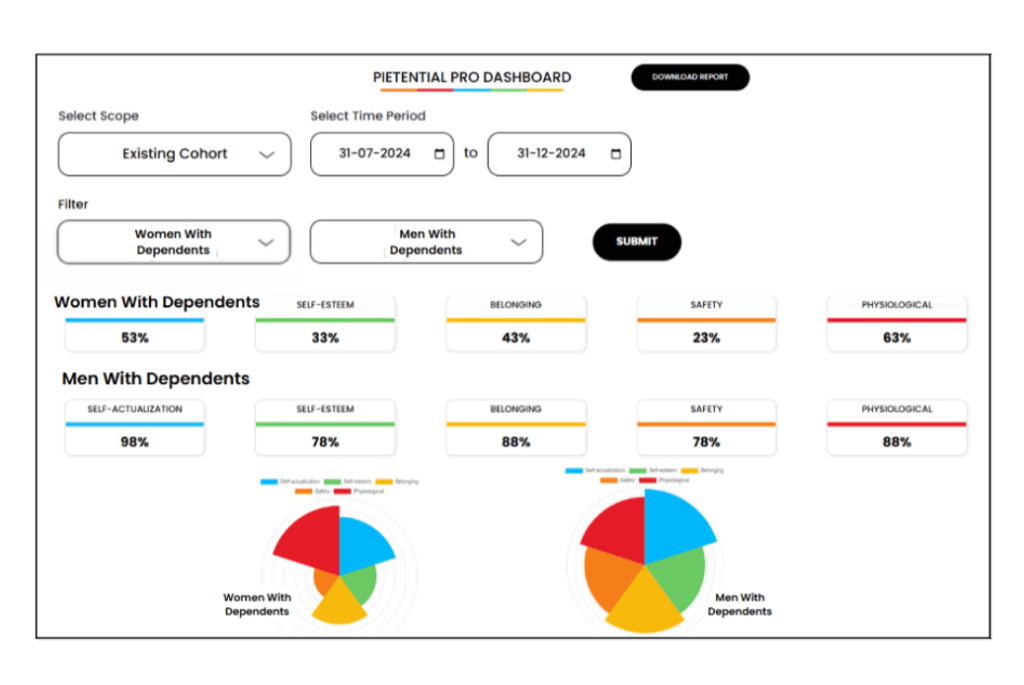
Practitioners can compare data between individuals, cohorts, or timeframes, identifying differences in wellbeing outcomes pre- and post-intervention or across distinct client groups. These insights support evidence-based decision-making, enabling practitioners to tailor interventions based on what works for different demographics, modalities, or stages in the client journey.
- Confidential and Secure
All data is encrypted and adheres to strict data protection standards. Pietential takes the privacy of its clients seriously and is GDPR compliant, assuring the high security of your data.
- No Integration Needed
No software installation or platform integration required. Practitioners can launch Pietential with clients in minutes using a secure login link or QR code.
- Freemium Use for Lead Generation
Practitioners can offer the Pietential assessment to potential clients as a conversation starter or value-add tool, using insights to personalize proposals and build trust from the first interaction.
These tools not only enhance the therapeutic or coaching experience—they empower clients to take control of their wellbeing while giving practitioners measurable insight into the impact of their work.
How Practitioners Use Pietential
- Private Practice Therapists & Psychologists
- Coaches and Life Strategists
- Counseling Centers & University Clinics
- Wellbeing Program Facilitators

Each group uses Pietential to improve onboarding, guide treatment or coaching plans, and demonstrate measurable outcomes.
What You Gain as a Practitioner
- A science-backed lens into the full spectrum of your client’s wellbeing
- A structured method to co-create goals and track progress
- A visual tool to deepen trust and engagement
- A measurable, scalable way to demonstrate your impact
- A proactive approach to catch issues before they escalate
A Future Where Measurement Meets Meaning
Psychological transformation is both an art and a science. Pietential respects this balance—bringing objective insight into human growth without diminishing intuition or empathy. It doesn’t replace your methodology; it illuminates it.
Because when your clients can see their growth, they believe in it. And when you can show your impact, your practice grows—with clarity, credibility, and care.