Introduction
As enterprises increasingly rely on AI systems like IBM Watson and Microsoft Azure AI to enhance decision-making in human resource management, many still face challenges in utilizing foundational wellbeing data to improve key HR performance metrics. The issue is not a lack of data but rather the absence of real-time, science-backed wellbeing data directly influencing key outcomes like engagement, retention, and performance. Most organizations lack an effective tool that delivers holistic wellbeing insights at the individual, cohort, and total population levels—data crucial for strategic, AI-driven decisions.
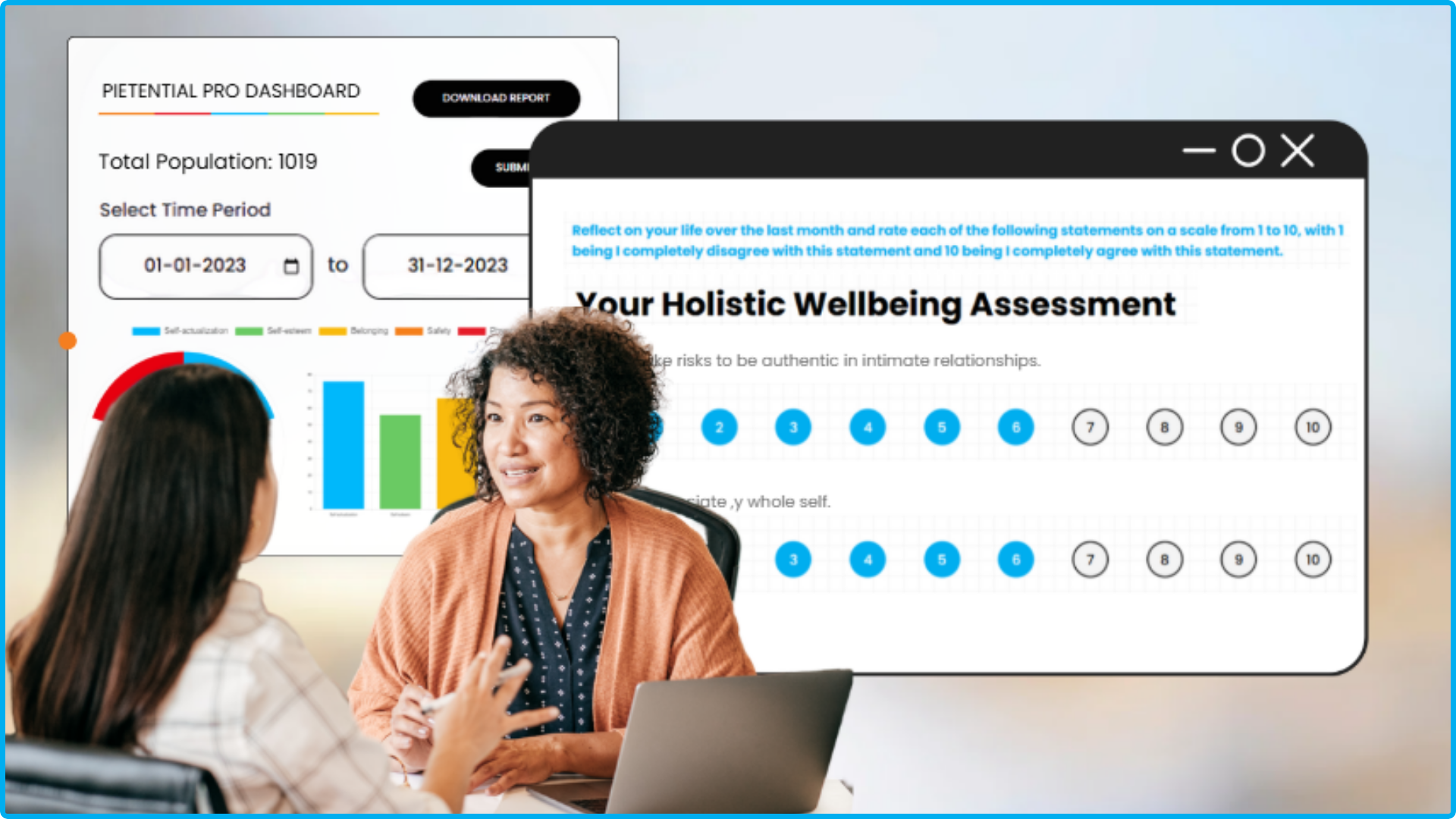
Pietential, a cloud-hosted diagnostic, monitoring, and development platform grounded in Maslow’s Hierarchy of Needs (MHN), addresses this gap. Pietential allows enterprises to integrate real-time, psychometrically validated wellbeing data into their AI systems via a simple API. This integration enables enterprises to conduct wellbeing gap analyses, identify risk areas like declining engagement or fading belonging, and develop targeted remediation plans based on wellbeing data that underpins HR’s key performance metrics. This not only creates efficiencies in decision-making but also empowers organizations to shift from reactive to proactive strategies for employee wellbeing and organizational success.
The Current Gap in Measuring Wellbeing for HR’s Key Metrics
Enterprises collect vast amounts of data through HR information systems (HRIS) and enterprise AI systems, typically focused on KPIs like engagement, retention, and performance. However, most of these metrics are based on lagging indicators—outcomes of deeper factors rather than proactive measurements of the underlying causes, such as holistic wellbeing.
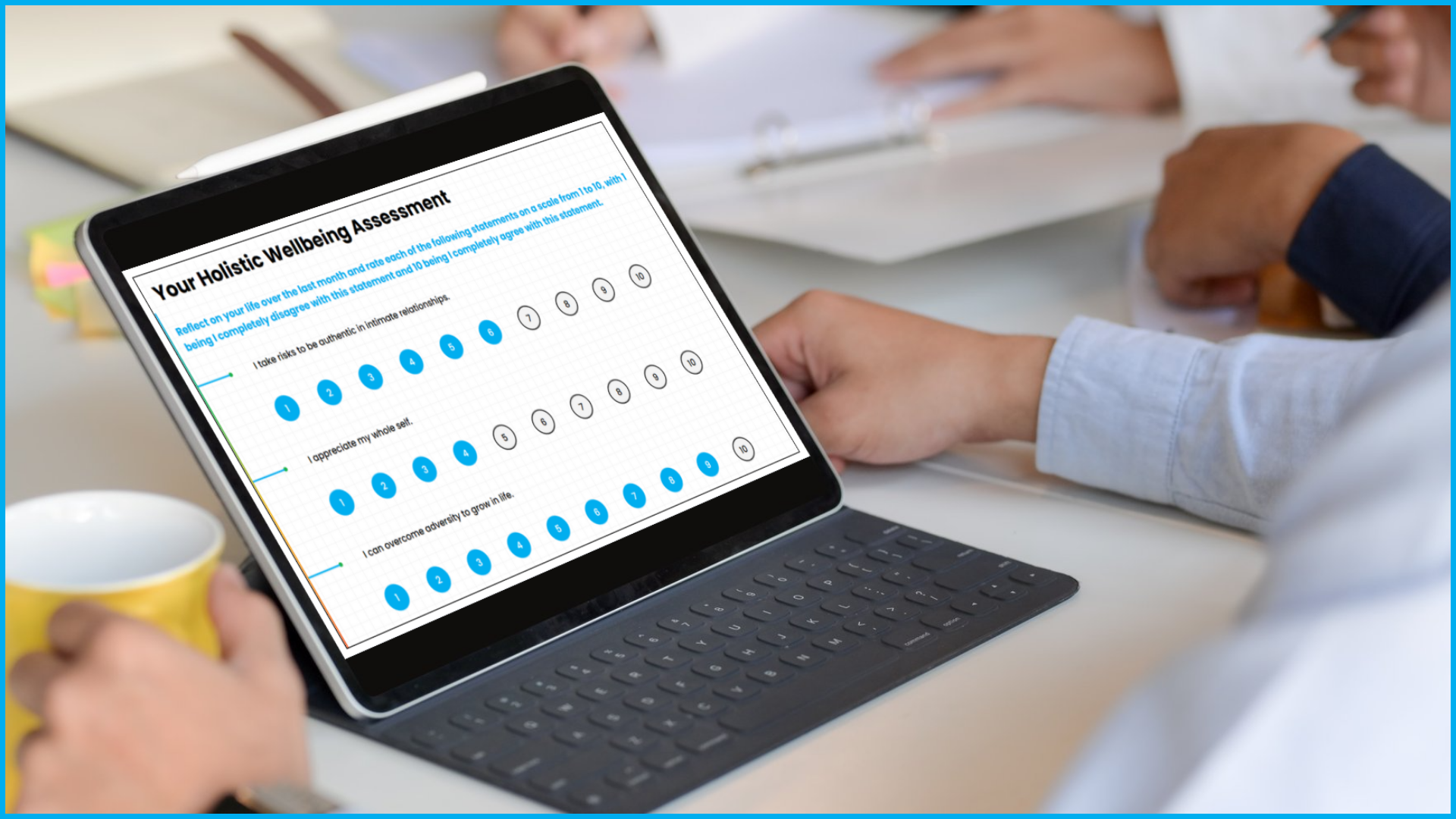
Wellbeing is the core, generative state that drives these KPIs. However, many organizations continue to rely on incomplete or outdated methodologies to measure it. They often use surveys that are neither reliable nor validated, and lack real-time insights. Pietential solves this by providing a science-backed, psychometrically validated assessment tool, not a survey. This assessment measures holistic wellbeing in a way that is both accurate and actionable, offering real-time insights that enterprises can leverage for HR decision-making.
The Need for Root-Level Wellbeing Data
Most HR metrics—engagement, retention, and performance—are influenced by underlying wellbeing. A fading sense of belonging, for instance, can quickly erode employee engagement and retention rates, yet these issues often remain undetected until they manifest as measurable lagging indicators, such as absenteeism or turnover. Without a tool like Pietential to monitor wellbeing, HR teams are left with an incomplete picture.
Pietential goes beyond measuring surface-level engagement. It focuses on holistic wellbeing, which is transcendent of whether an individual is at work or not, making it a key foundation for KPIs that matter most to HR leadership, Chief People Officers (CPOs), and other decision-makers.
Pietential’s Value Proposition: Real-Time, Science-Backed Wellbeing Data
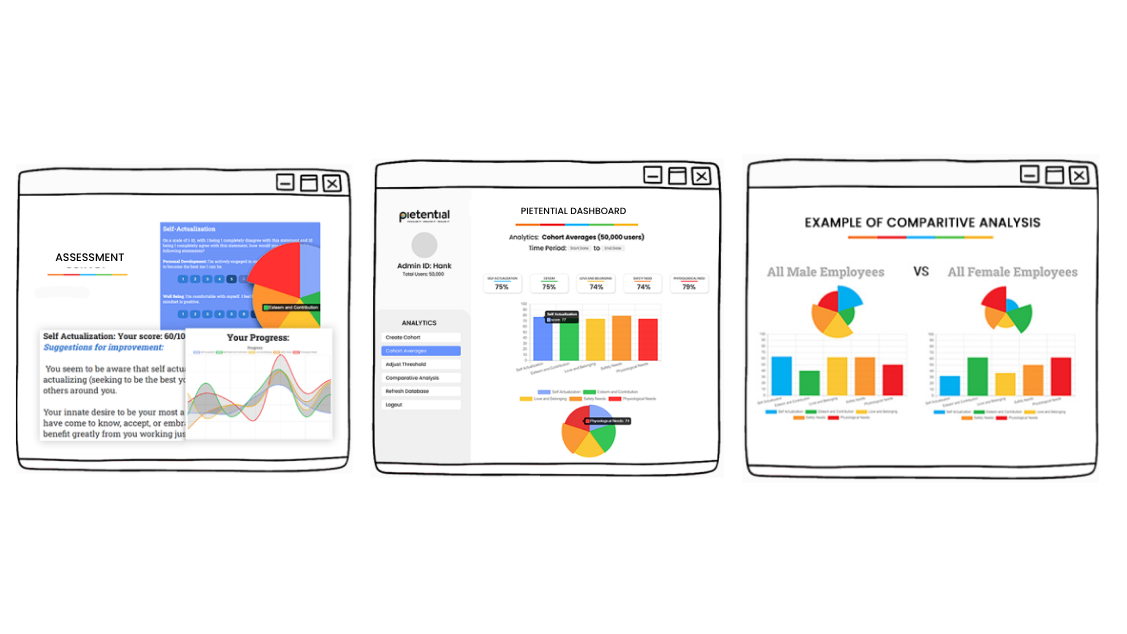
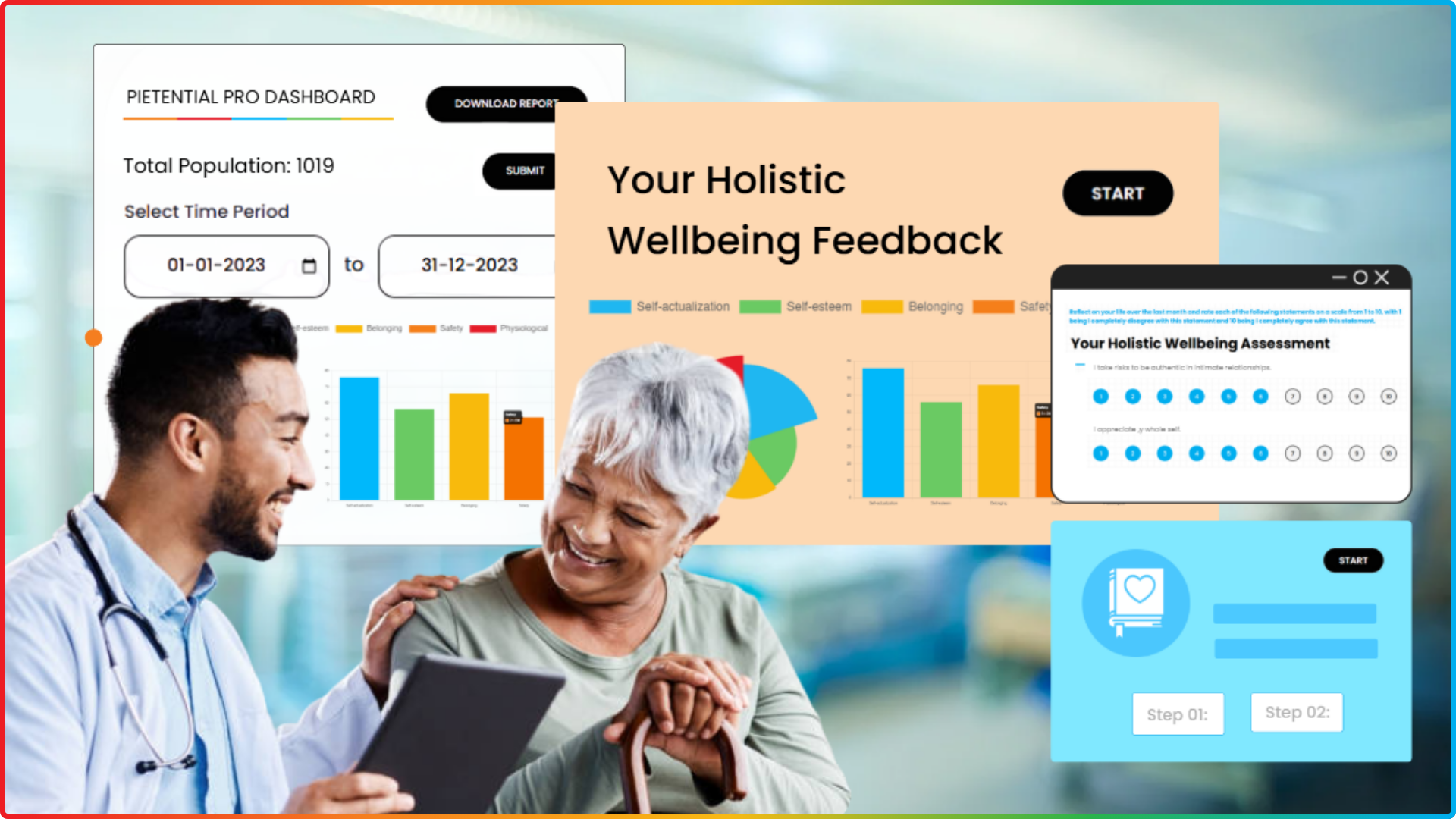
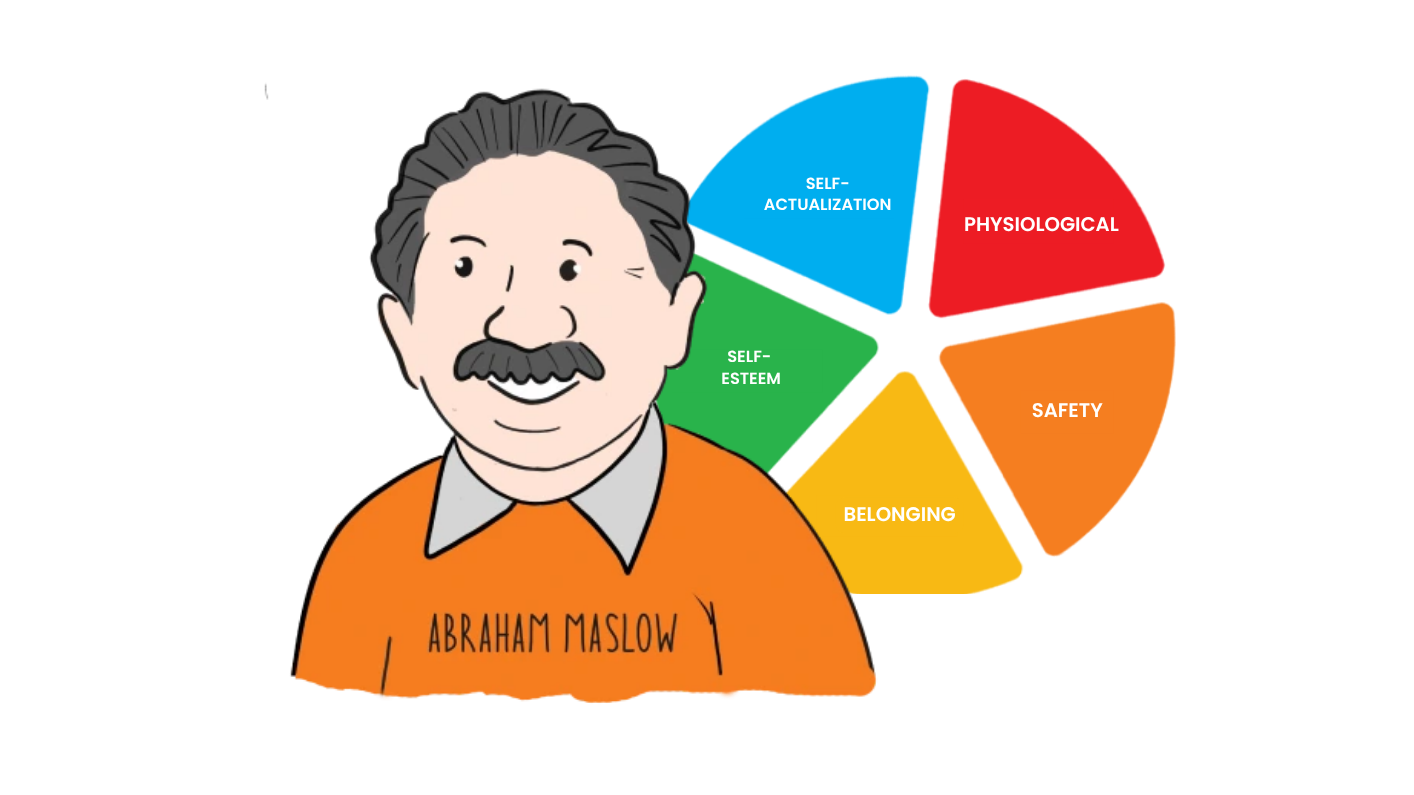
Pietential’s strength lies in its foundation in Maslow’s Hierarchy of Needs, conceptualized not as a tiered structure but as a dynamic pie chart where all aspects of wellbeing—physical, emotional, psychological, and social—are actively in play and continuously measured. This science-backed assessment provides reliable data across five domains of wellbeing and their subdomains, enabling HR leaders to monitor core wellbeing and its direct impact on traits like engagement and retention.
Holistic Wellbeing and KPIs
For large enterprises, wellbeing is the foundation of KPIs such as:

Engagement:
A high sense of belonging and purpose directly correlates to deeper employee engagement.
Retention:
Wellbeing is a leading indicator of whether employees will stay with the company long-term. Addressing wellbeing gaps proactively can reduce turnover.

Performance:
Employees with balanced wellbeing across MHN’s domains are more likely to perform consistently and at higher levels.
The problem most companies face is that no one is accurately measuring holistic wellbeing. Pietential changes this by offering real-time, validated wellbeing data that enterprises can leverage to inform and drive these critical KPIs. This data is not just another metric—it serves as the root measurement that enables AI systems to monitor and improve HR performance outcomes.
Seamless API Integration with Enterprise AI Systems
Pietential integrates effortlessly with enterprise AI systems through a simple API, enabling companies to extract their data from Pietential’s cloud-hosted platform directly into their AI infrastructure. This allows HR teams to enrich their existing AI systems with real-time wellbeing data, making it possible to assess engagement and retention in the context of holistic wellbeing.
Real-Time Data to Drive Next-Level HR Analytics
Once integrated, Pietential enables AI systems to perform deeper, more actionable
analyses. By ingesting real-time wellbeing data, enterprises can conduct
wellbeing gap analyses, assess cohort-specific trends, and identify risks at the
individual, cohort, and population levels.
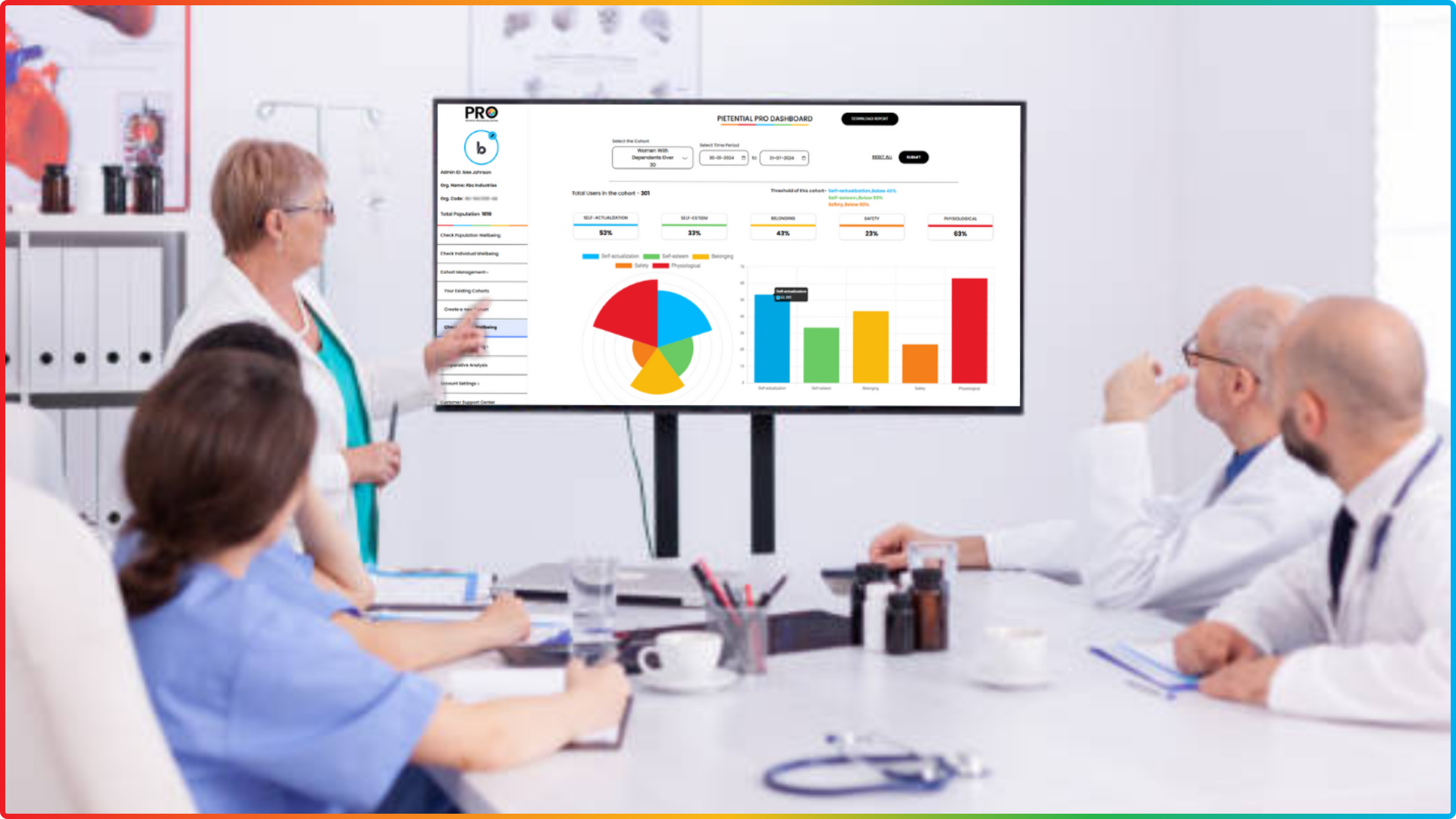
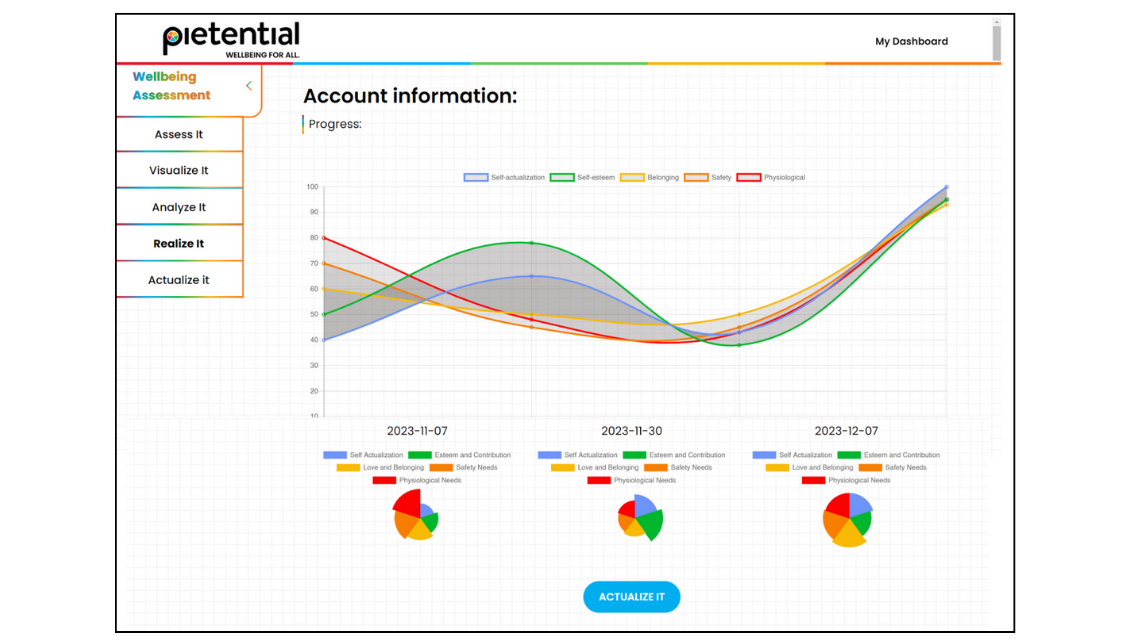
For instance, AI systems could analyze wellbeing trends across departments or demographic groups, revealing potential risks like a declining sense of belonging or psychological safety within a particular cohort. This kind of analysis empowers HR teams to intervene early, mitigating risks before they affect broader organizational performance.
Here’s an example of a query that an AI admin might use:
“Query the wellbeing trends in the engineering department for the last 90 days, focusing on the domains of belonging and emotional safety. Identify any employees or cohorts that have seen a consistent decline in wellbeing scores and recommend personalized interventions, such as internal coaching or wellbeing resources, tailored to their needs.”
Monitoring Cohort-Based Wellbeing
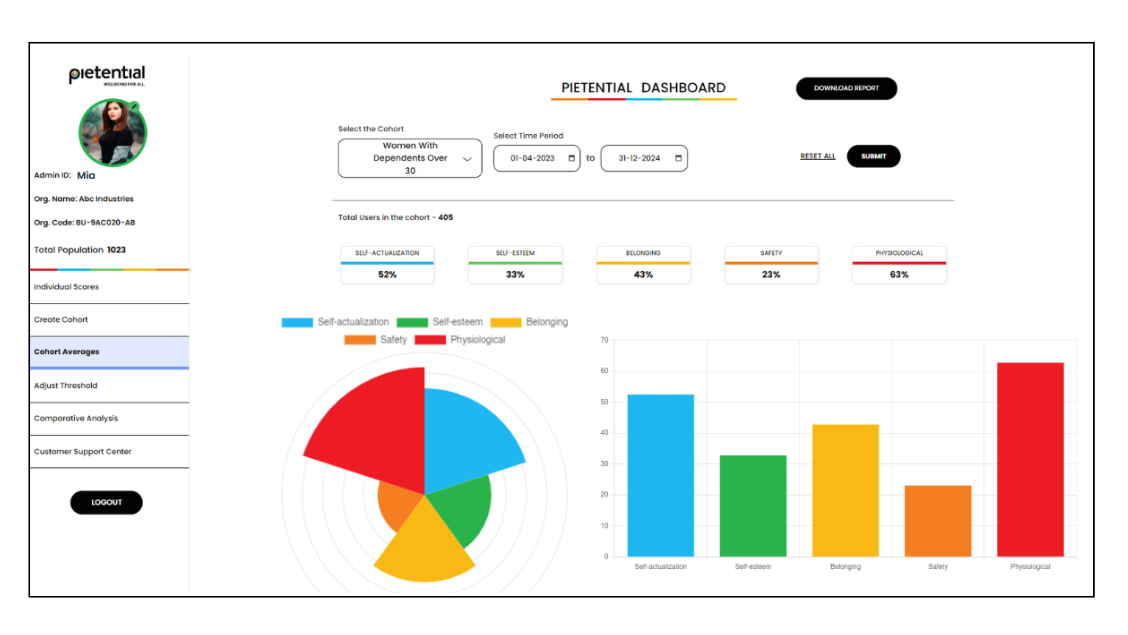
Pietential’s platform based on demographics like roles, departments, age, race, or location— giving AI systems the ability to track wellbeing trends across various segments of the organization. This cohort level analysis enables HR teams to tailor their interventions based on the unique needs of different employee groups, leading to more personalized and effective strategies.
Empowering Coaches with Actionable Wellbeing Data
One of Pietential’s key applications is in its ability to support internal or contract coaches. By leveraging Pietential’s real-time wellbeing data, coaches can monitor individual employees’ wellbeing progress and better understand how their holistic wellbeing evolves over time. This data provides deeper insights for coaches to design more personalized development plans and track the effectiveness of their interventions, ultimately improving employee outcomes. In addition, Pietential’s data can be integrated with third-party coaching platforms, offering a seamless way for coaches to enhance their understanding of employee wellbeing without the need for separate systems or manual tracking.

Beyond Gap Analysis: Actionable HR Interventions
The insights generated from Pietential’s data allow HR teams to move beyond basic wellbeing assessments and into actionable, data-driven interventions. AI systems, enriched with Pietential data, can identify early warning signs of wellbeing decline— such as fading belonging or toxic work environments where certain cohorts don’t feel safe—and suggest targeted solutions. This gives enterprises the ability to act on wellbeing data in real time, rather than waiting for lagging indicators to emerge.
This kind of proactive intervention can significantly reduce the costs and delays associated with traditional management consulting approaches. Rather than hiring expensive external consultants, HR teams can use Pietential’s platform and their AI systems to generate internal solutions that are both timely and cost-effective.
Conclusion
Pietential offers a critical solution for large enterprises seeking to integrate wellbeing data into their AI driven decision-making processes. As a science-backed diagnostic, monitoring, and development platform, Pietential delivers real-time insights into holistic wellbeing, enabling enterprises to perform wellbeing gap analyses, identify risks, and implement proactive interventions. By integrating this data with enterprise AI systems, HR teams can move beyond traditional, reactive approaches and toward proactive management of key performance metrics like engagement, retention, and performance.
For Chief People Officers (CPOs), HR leaders, and decision-makers in human capital management, Pietential provides the missing link—real-time, reliable wellbeing data that transforms how organizations approach employee wellbeing, all while empowering their AI systems to generate more precise and actionable insights. This integration not only drives operational efficiencies but also helps foster a healthier, more engaged workforce, ultimately leading to stronger organizational performance.