
A Comprehensive Assessment and Support Tool
Executive Summary
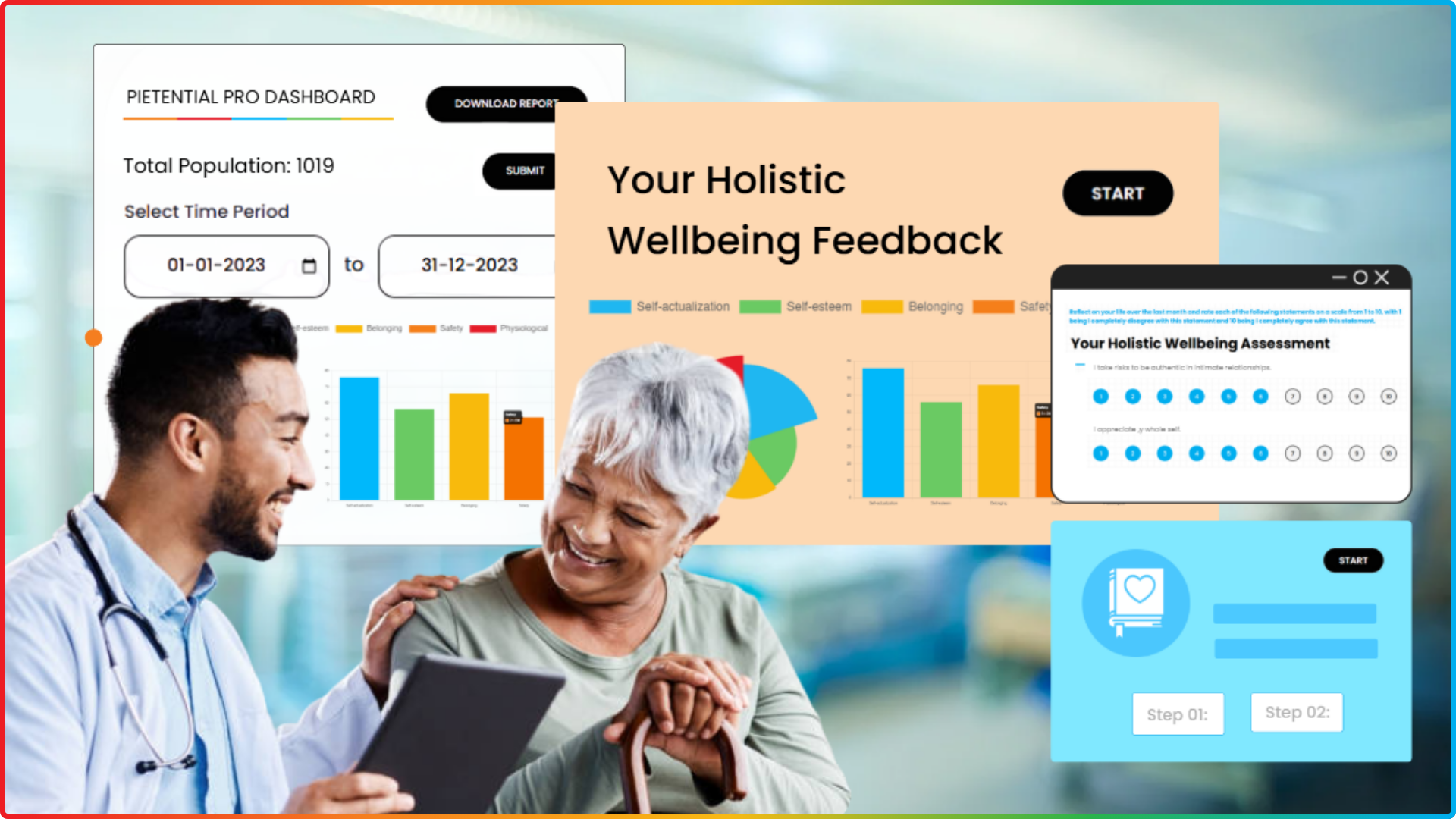
Police departments face unique challenges as they strive to maintain public safety while addressing the wellbeing of their officers. High stress, burnout, recruitment difficulties, and strained community relations are pervasive issues impacting workforce stability and operational effectiveness. Addressing these interconnected challenges requires a comprehensive, data-driven approach. Pietential provides a science-backed platform that assesses, benchmarks, and monitors holistic wellbeing, offering actionable insights and tools for police departments to deliver targeted, effective support.
This white paper explores Pietential’s innovative approach to supporting law enforcement, highlighting the platform’s ability to:
- Assess and benchmark wellbeing across five key domains: Physiological,Safety, Belonging, Self-Esteem, and Self- Actualization.
- Monitor changes over time to inform proactive interventions and evaluateprogram impacts.
- Deliver personalized, actionable insights to officers and leadership.
- Enable tailored support programs and drive equitable resource allocation.
Police departments can use Pietential to address critical wellbeing needs, measure the effectiveness of initiatives, and enhance outcomes in areas such as mental health, operational effectiveness, retention, and community relations. With Pietential’s advanced data visualization tools and ethical data use practices, law enforcement agencies gain a powerful ally in their mission to support officers and improve public safety.
By leveraging Pietential, police departments can create impactful, evidence- based programs that promote holistic wellbeing and help officers thrive in their demanding roles.
The Wellbeing Challenges Faced by Law Enforcement
Police officers operate in high-stress environments where the demands of their roles significantly impact their mental, physical, and social wellbeing. Addressing these challenges requires an integrated approach to ensure officers can perform effectively while maintaining their overall health and satisfaction.
Key Challenges:
- Burnout and Mental Health: Chronic stress, trauma exposure, and high expectations lead to elevated rates of burnout, PTSD, anxiety, and depression among officers.
- Recruitment and Retention: Police departments face increasing difficulty attracting and retaining talent, exacerbated by declining officer morale.
- Community Relations: Public perception of law enforcement is closely tied to officer behavior, influenced by their wellbeing.
- Reactive Wellness Programs: Existing programs often address issues after they arise rather than preventing them proactively.
These challenges necessitate a data-driven solution to comprehensively monitor, support, and enhance officer wellbeing.

Pietential: A Holistic Approach to Wellbeing
Pietential measures holistic wellbeing using five domains derived from Maslow’s Hierarchy of Needs, reinterpreted to reflect a modern and non-hierarchical approach. These domains are:
Physiology:
Encompasses officers’ physical health, including access to resources that sustain their physical wellbeing, such as nutrition, rest, and fitness.
Safety:
Addresses both physical safety in the line of duty and psychological safety, ensuring officers feel secure and supported in their work environment.

Belonging:
Focuses on the strength of interpersonal relationships, team cohesion, and officers’ sense of inclusion within their department and community.

Self-Esteem:
Evaluates self-confidence, recognition from peers and leadership, and feelings of professional and personal worth.

Self-Actualization:
Captures alignment with personal and professional values, as well as the pursuit of growth and fulfillment in their roles.
This comprehensive framework ensures that all facets of an officer’s wellbeing are considered, providing a holistic view that informs impactful support strategies.
How Pietential Supports Law Enforcement Wellbeing
Assessment and Benchmarking
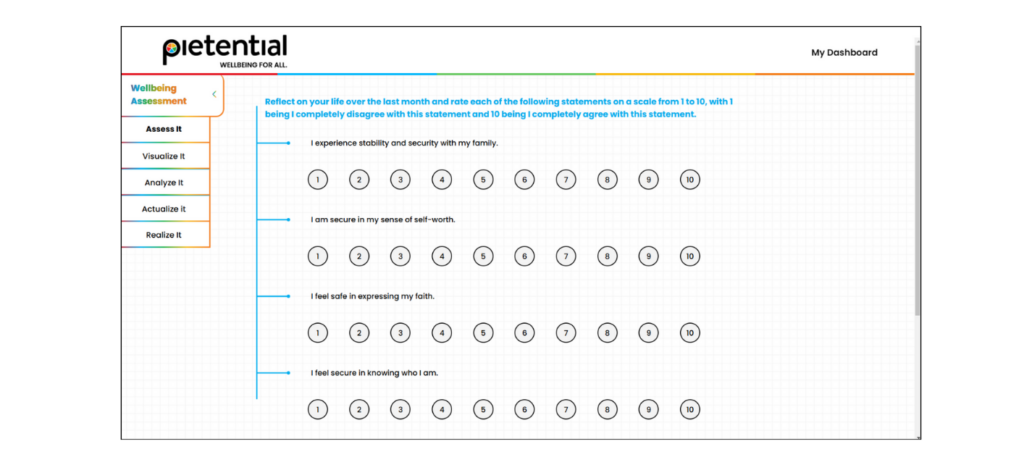
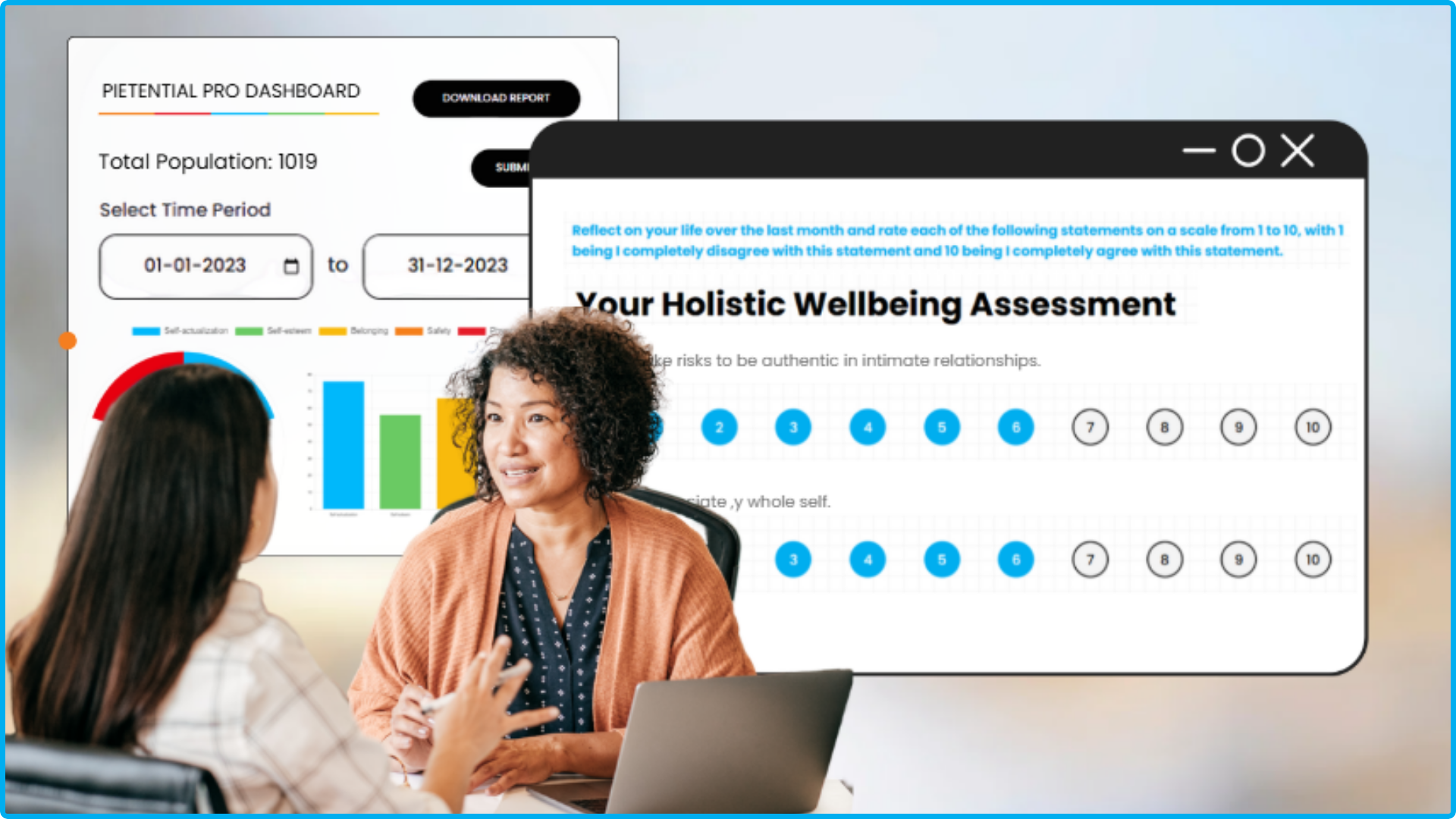
Effective support begins with understanding officers’ current state of wellbeing. Pietential’s science-backed assessment provides detailed insights into individual and cohort wellbeing across its five domains. These insights empower tailored interventions and strategic planning.
- Personalized Insights: Officers receive clear visualizations of their wellbeing, highlighting strengths and areas for growth.
- Population Benchmarking: Departments can benchmark officer cohorts against broader populations or specific subgroups, such as patrol officers or administrative staff.
- Customized Analysis: Pietential’s pre-assessment demographic setup allows analysis based on factors like rank, tenure, role, or geographic location.
Monitoring Progress
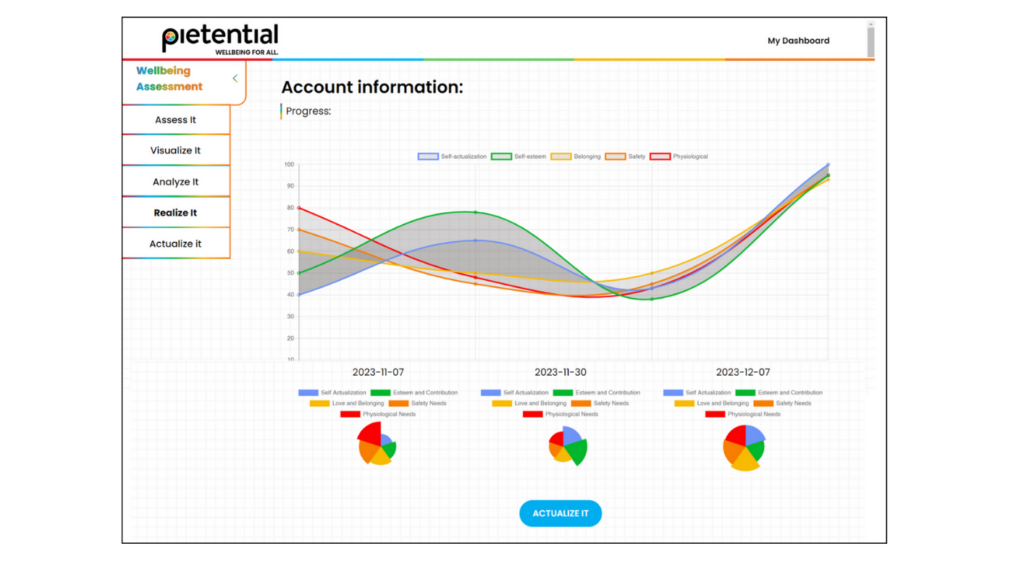
Wellbeing is dynamic, evolving with time and circumstances. Pietential’s monitoring tools allow departments to track these changes and respond proactively to emerging needs.
- Track Longitudinal Trends: Understand how officers’ wellbeing evolves over time, particularly in response to interventions or external events.
- Identify Wellbeing Gaps: Spot disparities within cohorts to ensure equitable resource allocation.
- Evaluate Program Impact: Measure the effectiveness of initiatives such as mental health counseling, peer support programs, or leadership training.
- Provide Wellbeing Alerts: Notify leadership of critical changes or risks, enabling timely intervention.
Tailored Interventions
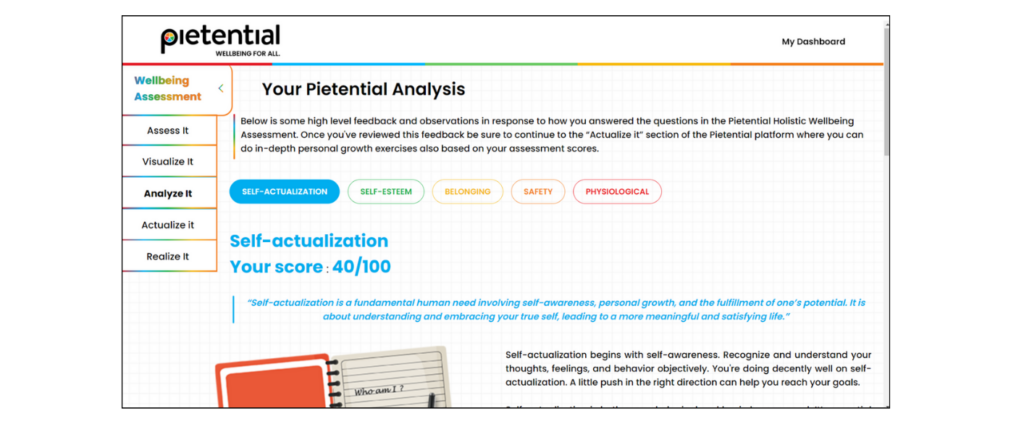
Targeted support is critical for addressing officers’ unique needs. Pietential equips departments with actionable data to design and implement meaningful programs.
- Design Targeted Programs: Use wellbeing data to identify gaps and guide the development of initiatives such as stress management workshops or peer mentorship programs.
- Enable Personalized Coaching: Enable one-on-one support by offering data-driven insights that help departments tailor resources to each officer’s unique wellbeing profile.
- Drive Preventative Action: Proactively identify at-risk officers and allocate resources to prevent challenges from escalating.
Real-Time Insights and Data Visualization

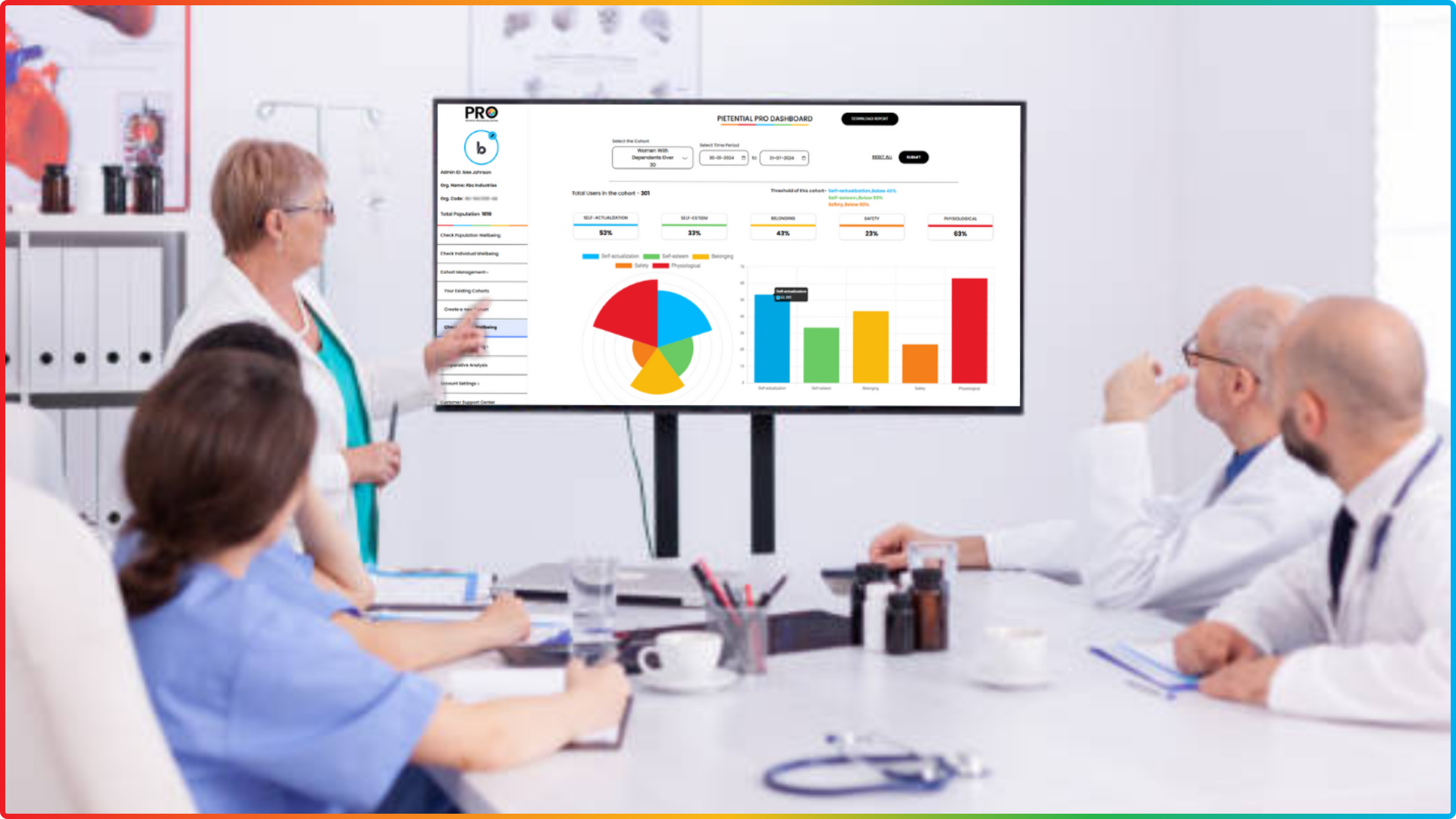
Timely and accurate data drives impactful decisions. Pietential’s visualization tools provide law enforcement agencies with the ability to understand and act on wellbeing data at various levels. These tools ensure that support strategies are both responsive and evidence-based.
- Analyze Cohort Wellbeing: Identify trends and disparities across demographics, such as tenure or rank.
- Monitor at Multiple Levels: View wellbeing data at individual, cohort, or department-wide levels.
- Communicate Impact::Share clear, compelling data with stakeholders to demonstrate program effectiveness.
- Respond to Crises: Quickly assess the wellbeing impact of major incidents, such as critical events or policy changes.
Applications for Law Enforcement

Supporting Mental Health
Mental health challenges are pervasive among officers, making focused initiatives essential. Pietential supports departments in identifying, monitoring, and improving mental health outcomes.
- Use wellbeing scores to reflect states influenced by stress and PTSD.
- Track the effectiveness of counseling and support initiatives with data-driven insights.
- Use wellbeing data to design and refine targeted mental health programs.
Enhancing Operational Effectiveness
Operational effectiveness is deeply tied to officer wellbeing. Pietential provides actionable insights to improve performance, decision-making, and team dynamics.
- Identify wellbeing gaps impacting field performance.
- Strengthen team cohesion through targeted interventions.
- Optimize training programs based on wellbeing data.
Advancing Recruitment and Retention
Recruitment and retention are critical for workforce stability. Pietential helps departments attract and retain talent by fostering a supportive environment.
- Highlight commitment to wellbeing in recruitment efforts.
- Reduce turnover through proactive support and interventions.
- Leverage wellbeing data to identify career satisfaction trends and retention risks.
Strengthening Community Relations
Community trust and officer behavior are closely linked. By improving officer wellbeing, Pietential enables better public engagement.
- Foster positive community interactions.
- Identify areas where additional training or support is needed.
- Demonstrate accountability and transparency through wellbeing initiatives.
The Pietential Advantage for Law Enforcement
Pietential’s capabilities go beyond assessment and monitoring, offering a robust foundation for program development and stakeholder engagement. Police departments can rely on its tools to drive meaningful outcomes for officers and the community.
- Science-Backed Validity: Psychometric reliability ensures accurate insights.
- Custom Demographic Analysis: Tailored reporting for unique subgroups within the department.
- Actionable Feedback: Practical recommendations for officers and leadership.
- Ethical Data Use: Secure, anonymized data aligned with privacy regulations.
- Proven Program Efficacy: Demonstrate the effectiveness of wellbeing programs to secure or increase funding.

Conclusion
Pietential equips police departments with the tools to assess, benchmark, and monitor holistic wellbeing effectively. By leveraging Pietential’s comprehensive insights, departments can deliver targeted support, enhance program efficacy, and ultimately improve the lives of their officers while strengthening public trust.
For more information or to explore how Pietential can support your police department, visit www.Pietential.com or contact us at (215) 714-7372.