
Introduction
In an increasingly competitive and knowledge-driven economy, traditional methods of business valuation, which prioritize tangible assets, are no longer sufficient. The most valuable assets within organizations are often intangible: the people. Valuation methodologies that recognize human capital as a critical driver of growth are reshaping how we assess organizational success and inform strategies for long-term value creation. This white paper explores how human capital can be measured and valued to drive business growth and how Pietential’s platform serves as a tool for tracking and enhancing this value.
The Shift Toward Intangible Assets
Traditionally, business valuation has been largely concerned with financial capital and tangible assets like equipment, real estate, and inventory. However, with the rise of the knowledge economy, intangible assets such as intellectual property, brand equity, and, most importantly, human capital have emerged as key drivers of value. Human capital, defined as the skills, experience, and creativity that employees bring to the table, contributes significantly to both innovation and operational efficiency.
Yet, despite its clear importance, the value of human capital is often underrepresented in balance sheets. Many organizations still view workforce expenses as liabilities rather than assets. This outdated perspective leads to missed opportunities for value growth. Instead, businesses should look at their workforce as a core investment—one that needs to be nurtured, quantified, and optimized.

Valuation Through the Lens of Human Capital
A forward-thinking approach to valuation considers human capital as a primary determinant of an organization’s future performance. This involves understanding the return on investment (ROI) of employees and how their engagement, productivity, and innovation drive organizational success.
Key to this understanding is the ability to track and measure human capital in a quantifiable way. The challenge lies in developing metrics that not only capture the contributions of individuals but also aggregate these insights at the organizational level to inform strategic decisions. Effective human capital valuation encompasses several dimensions:

Employee Engagement:
How much discretionary effort are employees contributing? Higher engagement leads to better organizational outcomes.

Workforce Development:
Are employees gaining the skills and knowledge necessary to keep pace with industry changes and foster innovation?

Retention and Stability:
High turnover rates can erode organizational value, whereas high retention correlates with institutional knowledge and stability.
Driving Value Growth with Human Capital
Organizations that focus on fostering and retaining high-value employees often experience better performance outcomes and higher business valuations. Engaged employees tend to go above and beyond their job descriptions, leading to increased productivity, innovation, and customer satisfaction. In contrast, organizations that neglect employee wellbeing and development can see these metrics decline, negatively impacting both short- and long-term value.
To optimize the value that employees bring to an organization, companies must invest in their workforce by promoting wellbeing, offering development opportunities, and ensuring a healthy work environment. By doing so, they transform human capital into a sustainable competitive advantage.
The Role of Pietential in Valuation and Value Growth
Pietential is uniquely positioned to address the challenge of quantifying and enhancing human capital. As a science-backed platform that measures holistic wellbeing, Pietential allows organizations to monitor the core dimensions of employee health and development that drive value.
Measuring What Matters
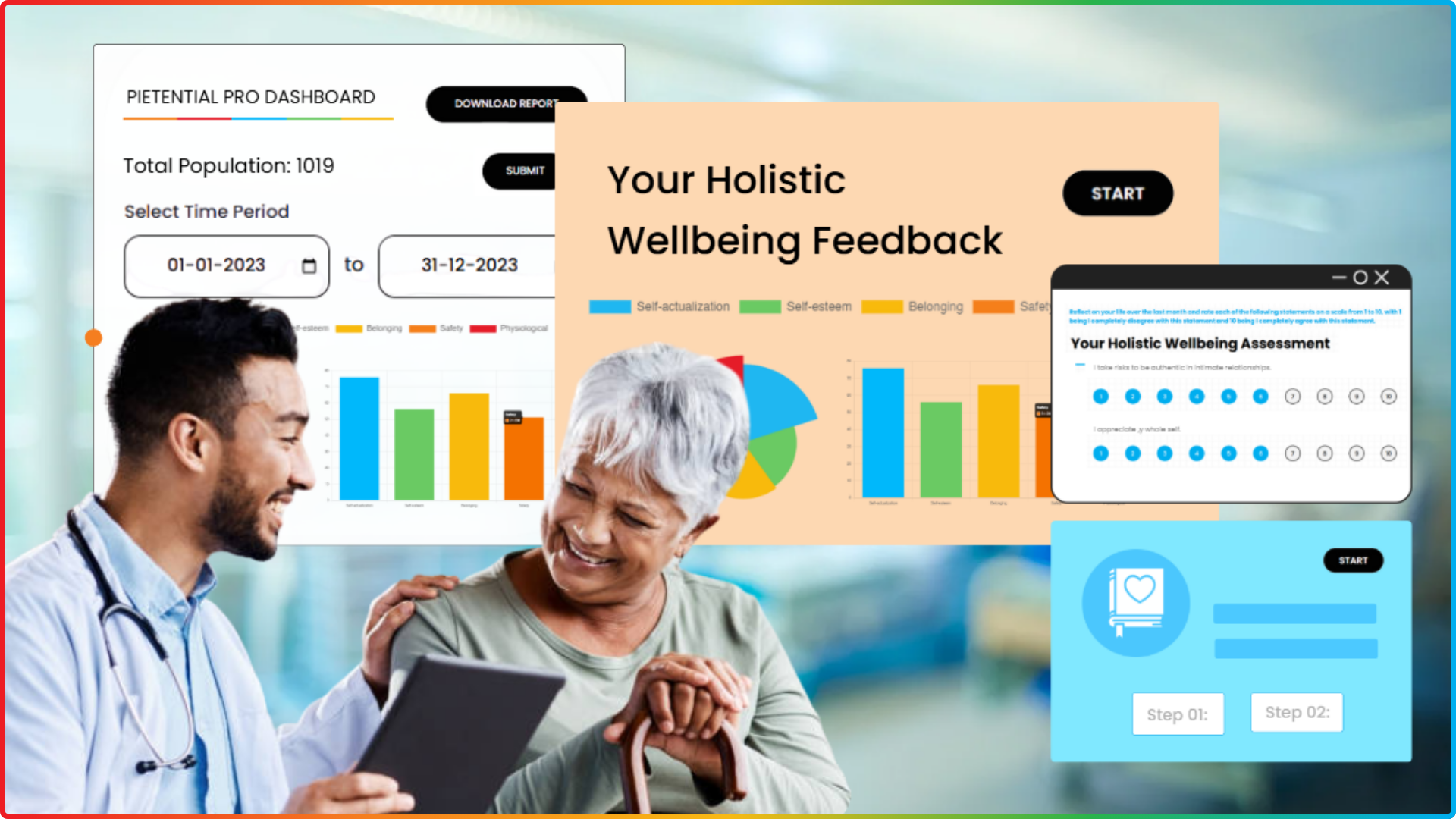
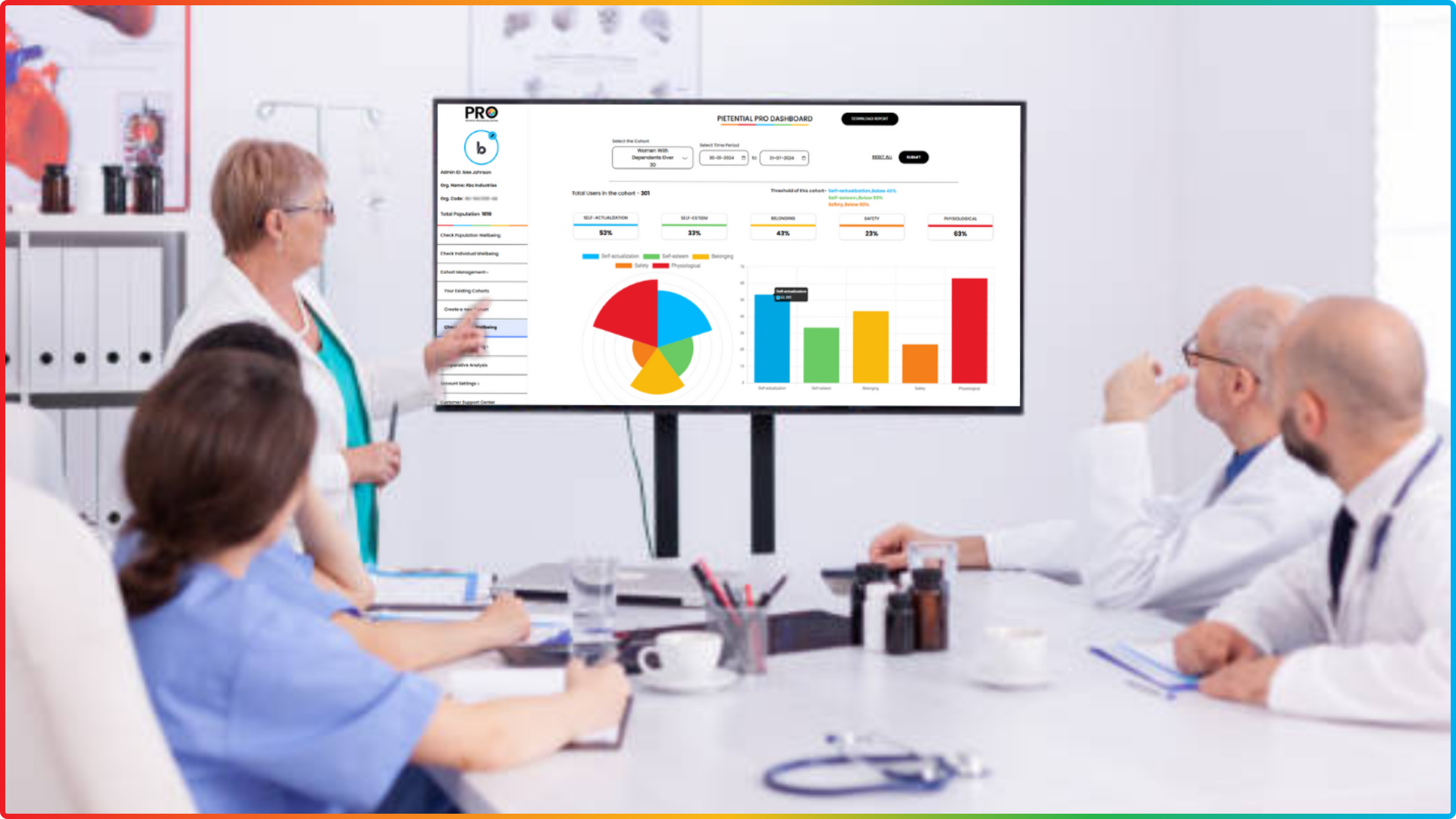
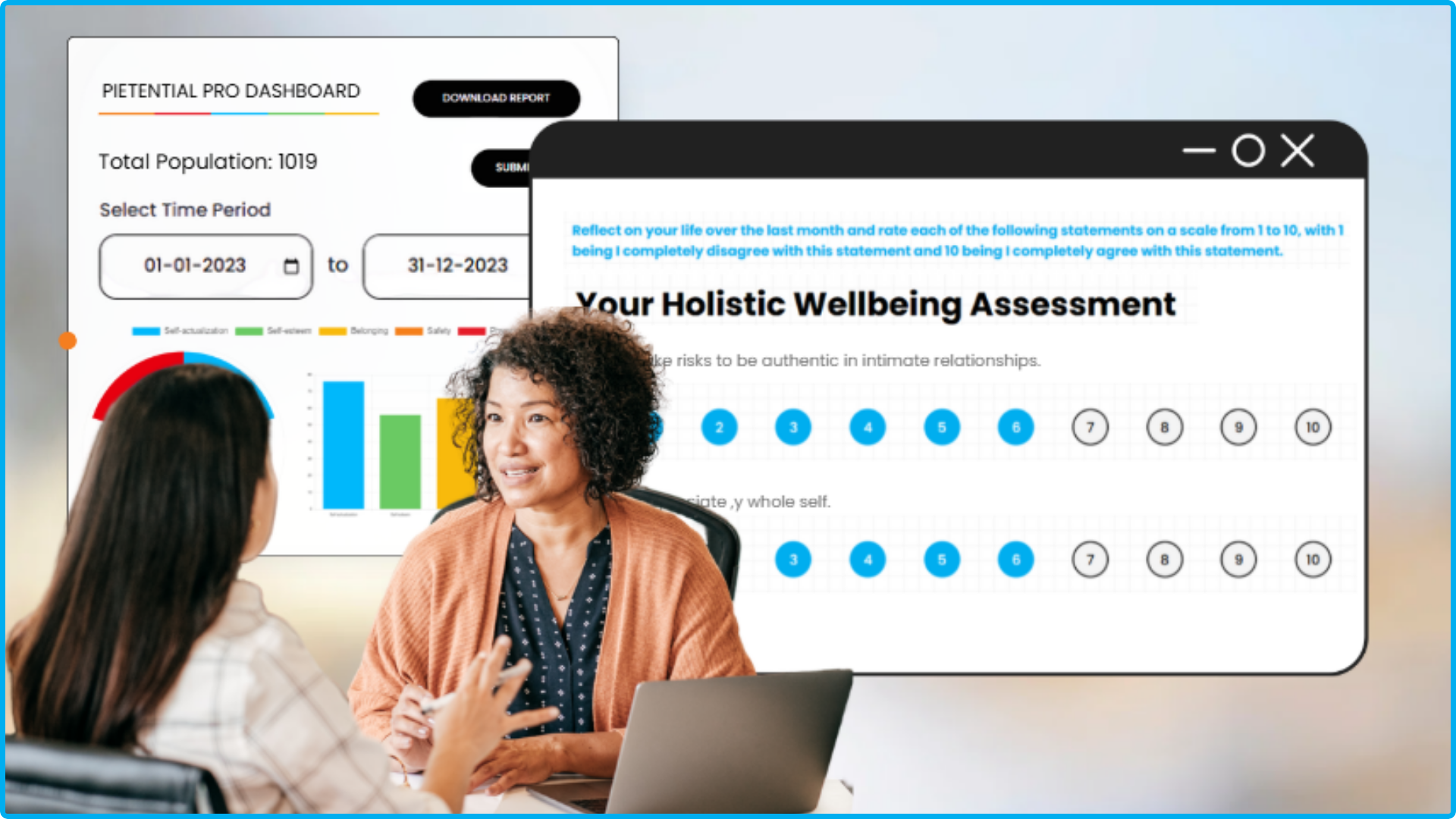
Pietential’s platform is built around five key domains, based on a well-established framework of human needs, which offers a comprehensive view of employee wellbeing:
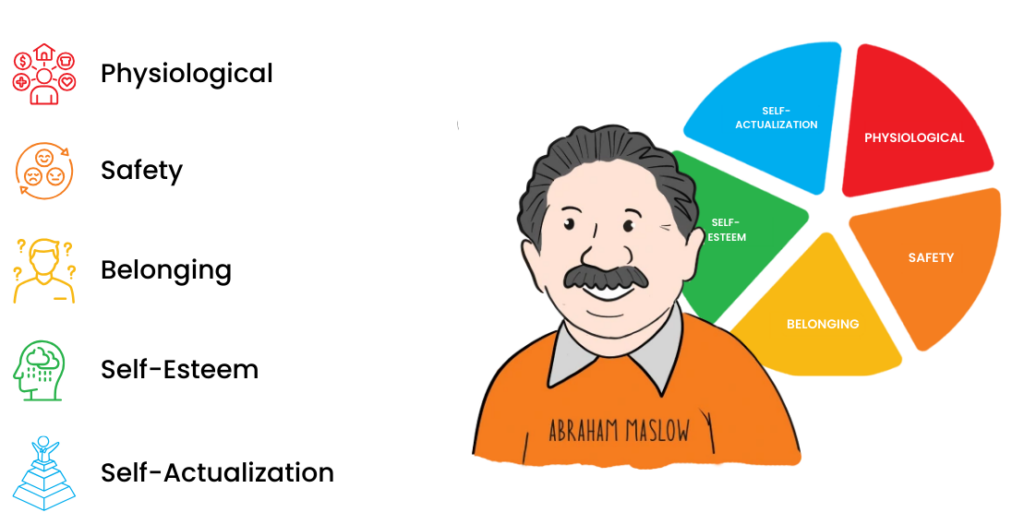
By understanding where individuals and cohorts are thriving and where they may require additional support, organizations can make informed decisions that enhance engagement, improve performance, and reduce turnover—key factors inhuman capital valuation.
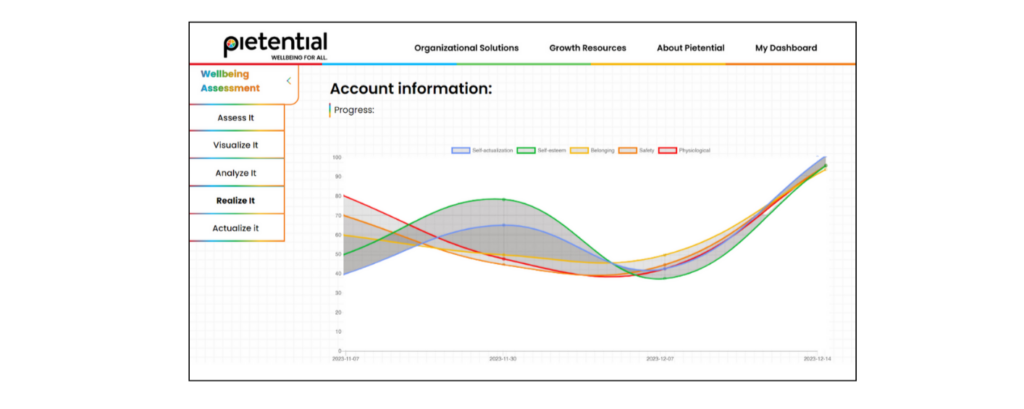
Tracking Progress Over Time
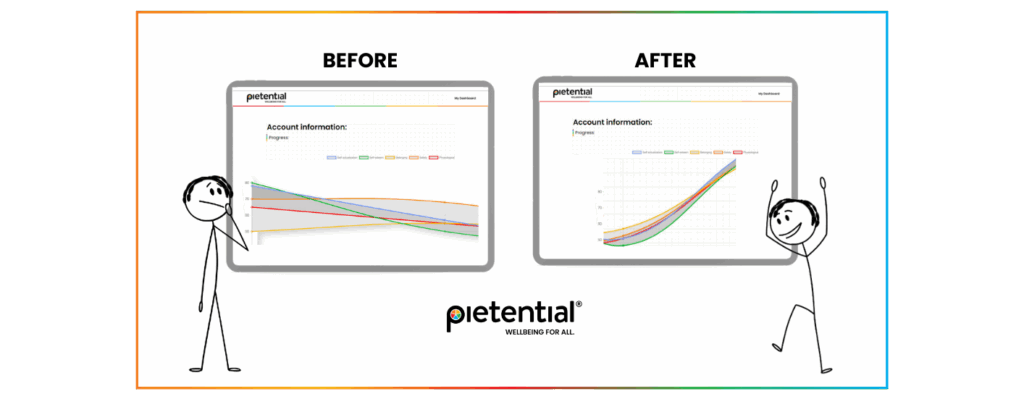
Pietential’s progress tracking feature is essential for longitudinal wellbeing studies. By continuously measuring these core domains across individuals, cohorts, and entire organizations, Pietential offers insights into how internal programs, like wellbeing and employee assistance programs (EAPs), are impacting human capital value. This data serves as a powerful tool for A/B testing, cohort analysis, and comparing pre- and post-program effectiveness.

Wellbeing as a Predictor of Value
Unlike traditional business metrics, which often measure lagging indicators like financial performance or revenue, wellbeing is a leading indicator of future performance. Organizations that invest in holistic employee wellbeing are more likely to experience sustainable value growth, as healthy and engaged employees are better equipped to drive innovation and operational excellence. Pietential provides the data-driven insights necessary to monitor and enhance this foundational aspect of human capital.

Integrating Human Capital Valuation into Strategic Planning
Valuing human capital should not be an isolated exercise; rather, it must be integrated into the broader strategic framework of the organization. Forward-looking companies leverage human capital valuation as part of their decision-making processes for mergers and acquisitions, talent acquisition, and resource allocation. By viewing employees as long-term investments, businesses can unlock untapped potential and accelerate value growth. Pietential plays a crucial role here as well, offering organizations a detailed picture of the wellbeing landscape across different demographics and locations. This insight can be used to develop tailored programs that improve overall workforce health and drive better business outcomes.
Conclusion
In the modern business landscape, human capital is not just a metric of productivity; it is a driver of value. By taking a holistic approach to employee wellbeing and engagement, organizations can unlock new levels of performance and drive sustained growth. Pietential’s platform provides the tools necessary to track and optimize human capital, turning people from a cost center into a value-generating asset.
Through a greater focus on wellbeing, supported by robust metrics, companies can align their strategies with long-term value creation, ensuring that human capital is recognized for what it truly is: the foundation of business success.